The Footwear Collective
EarthDNA X LCAD
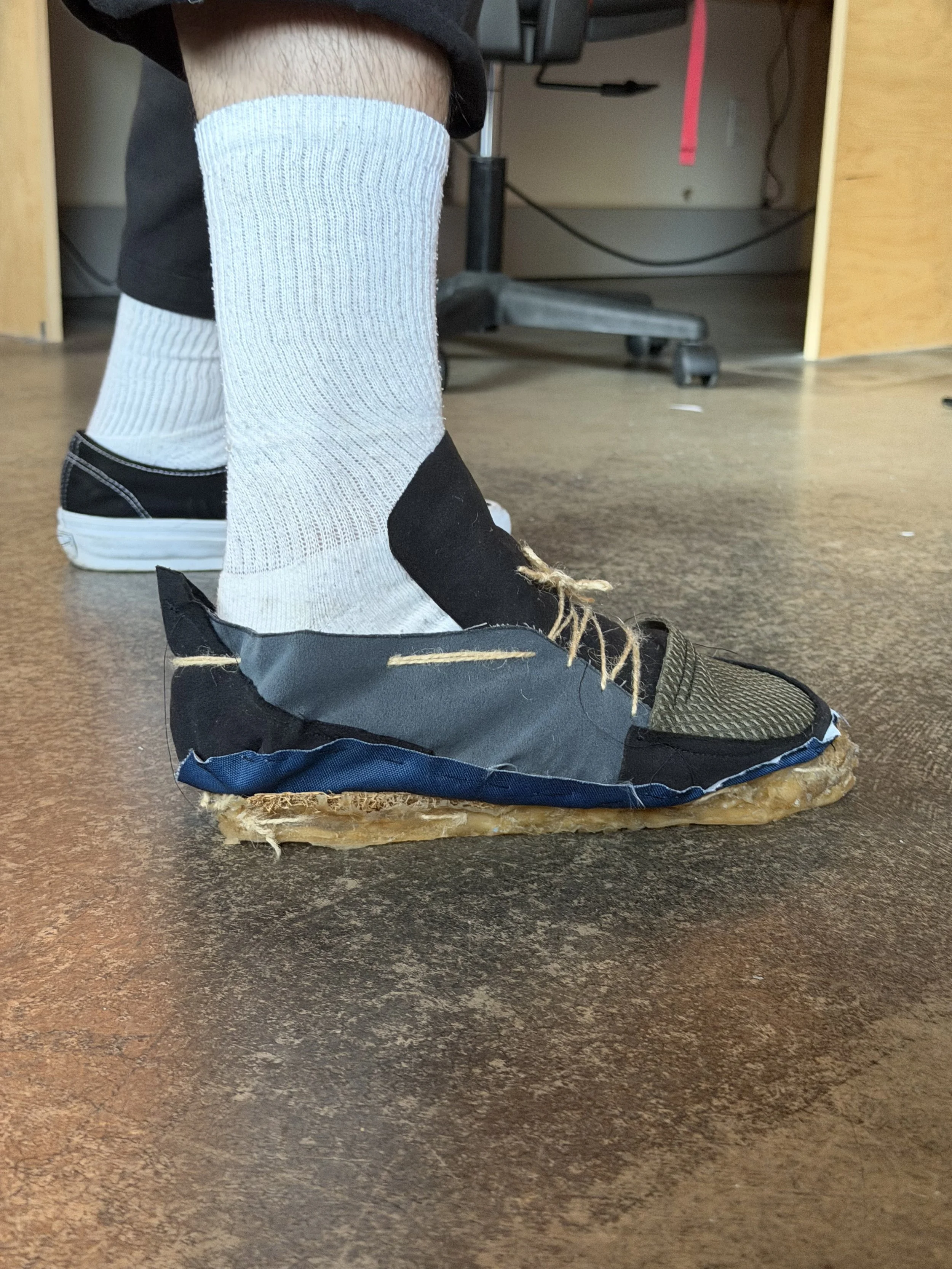
In partnership with The Footwear Collective, a collaborative initiative between EarthDNA and leading footwear brands, with the goal of designing a circular, sustainable, and scalable solution for the life cycle of the shoes on your feet. My goal was to design a process that could be easily implemented without interrupting current design practices like material choice or style.
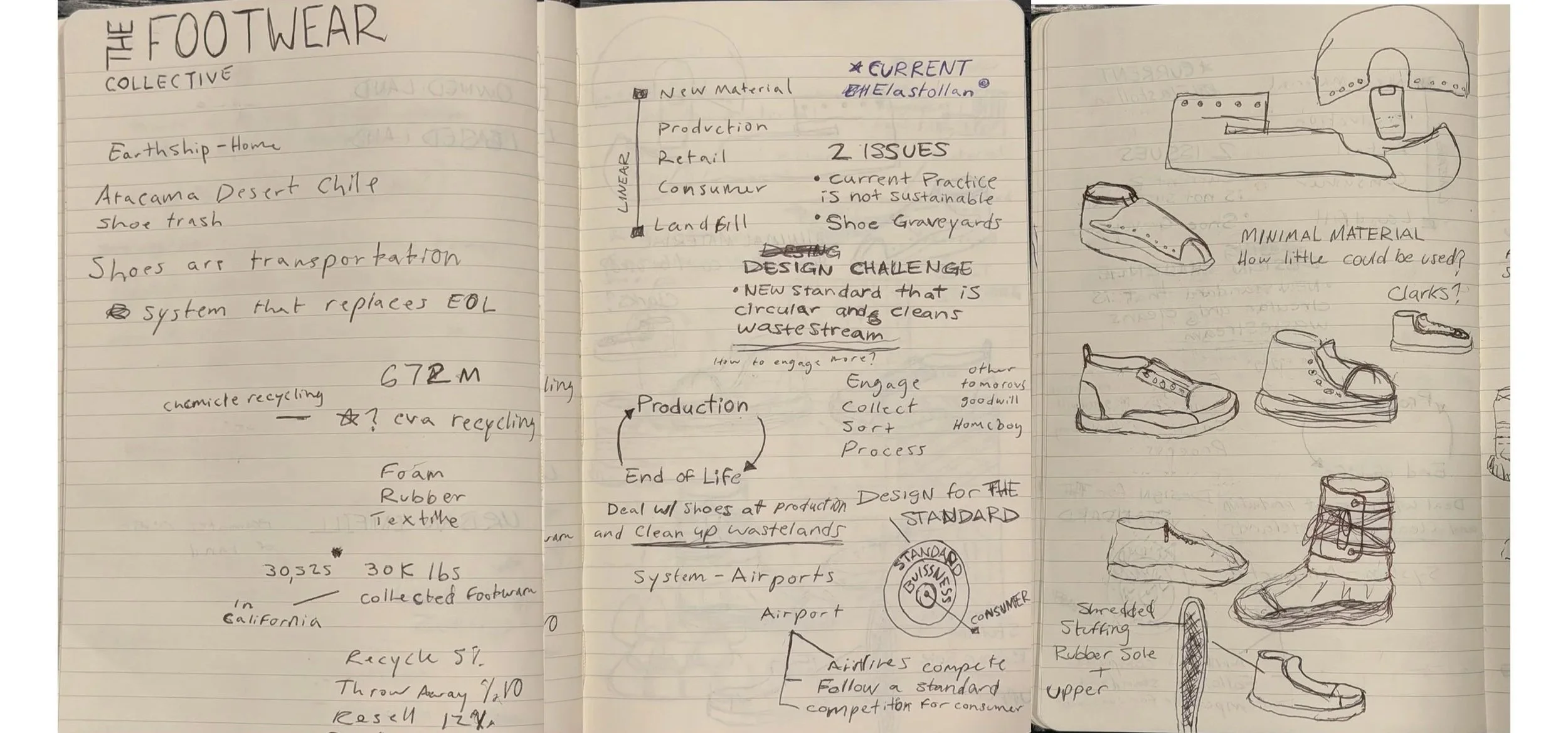
The Process
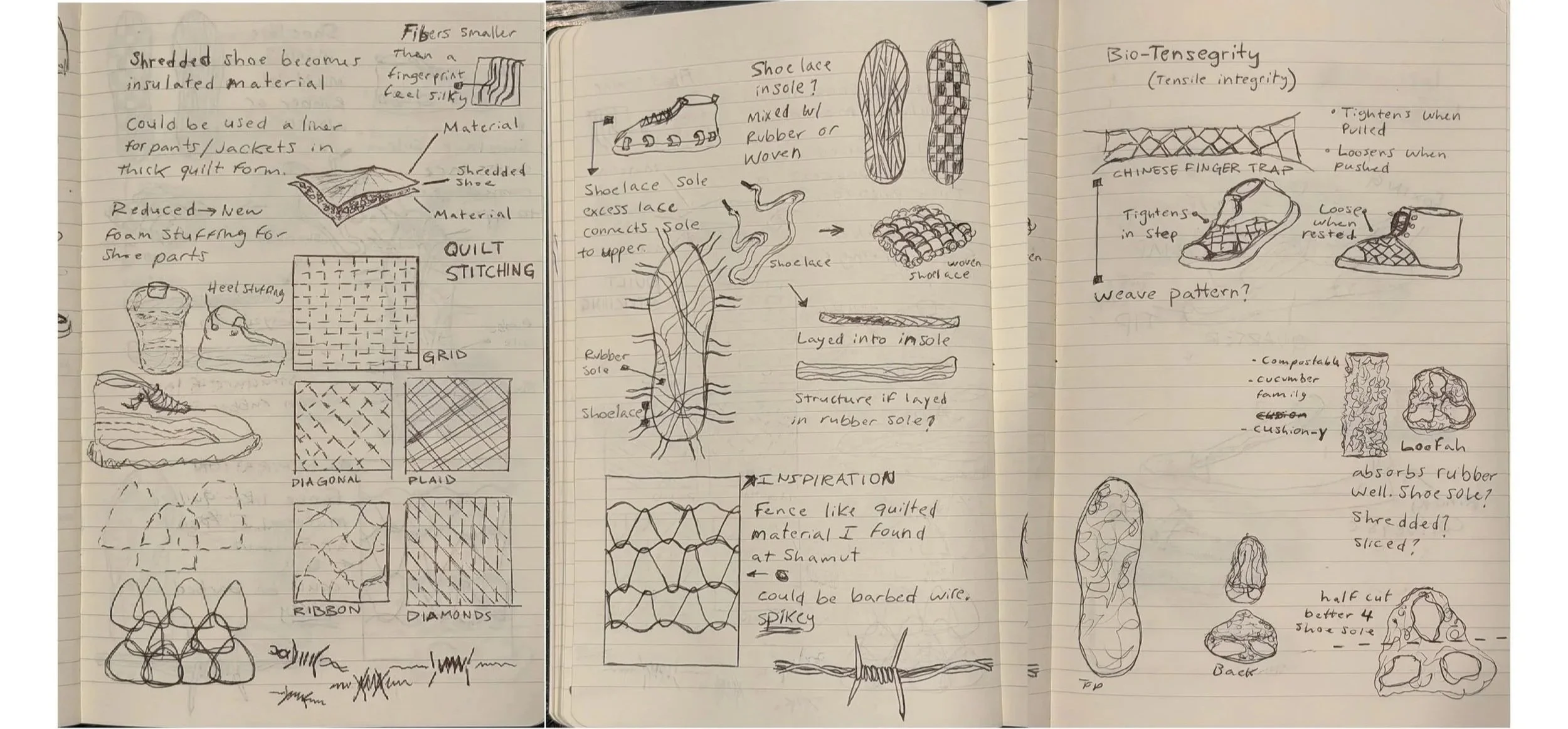
Exploring how natural materials react with natural silicone in a footwear environment; the goal being to reduce the overall amount of rubber being used for the shoe sole.
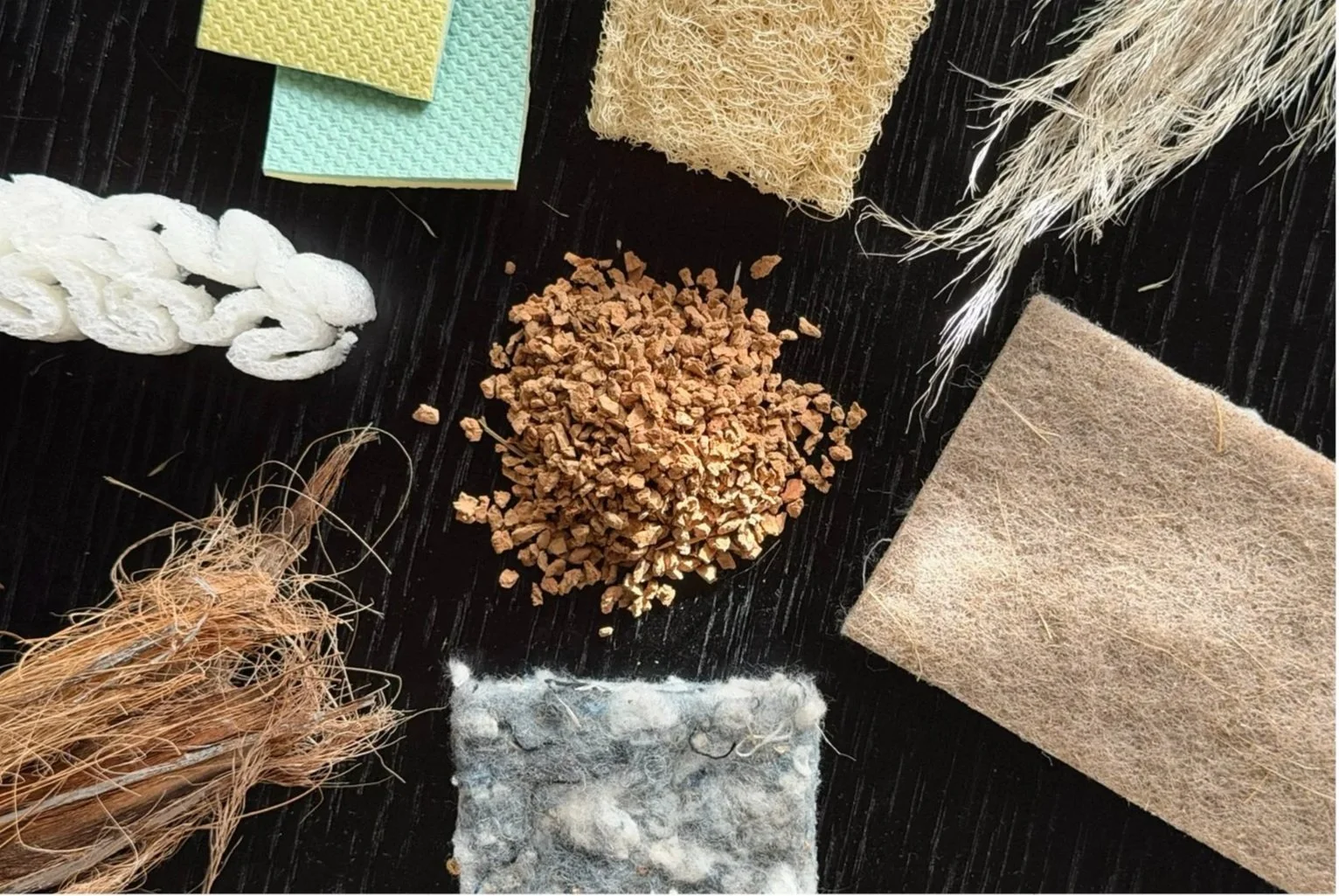
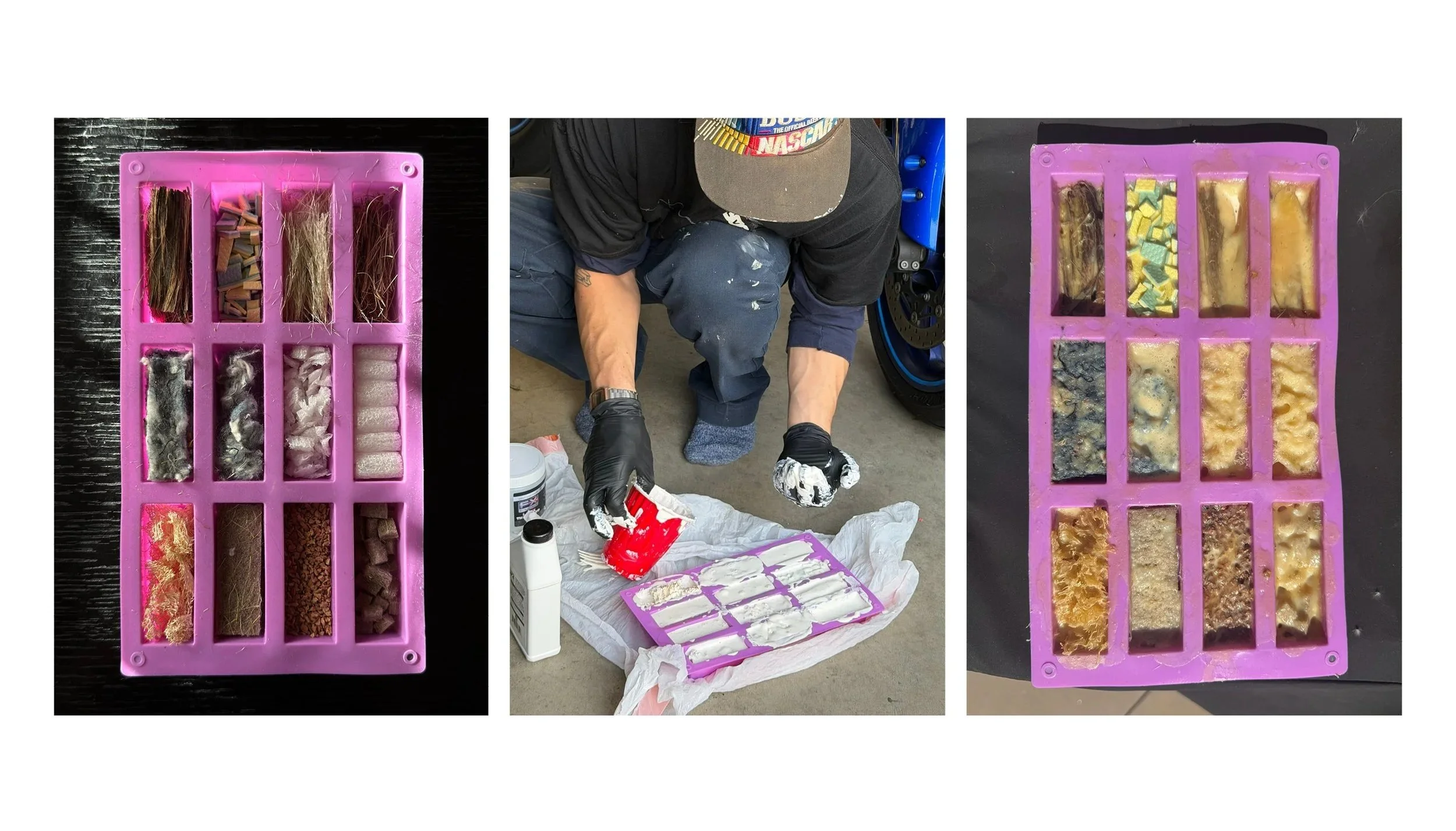
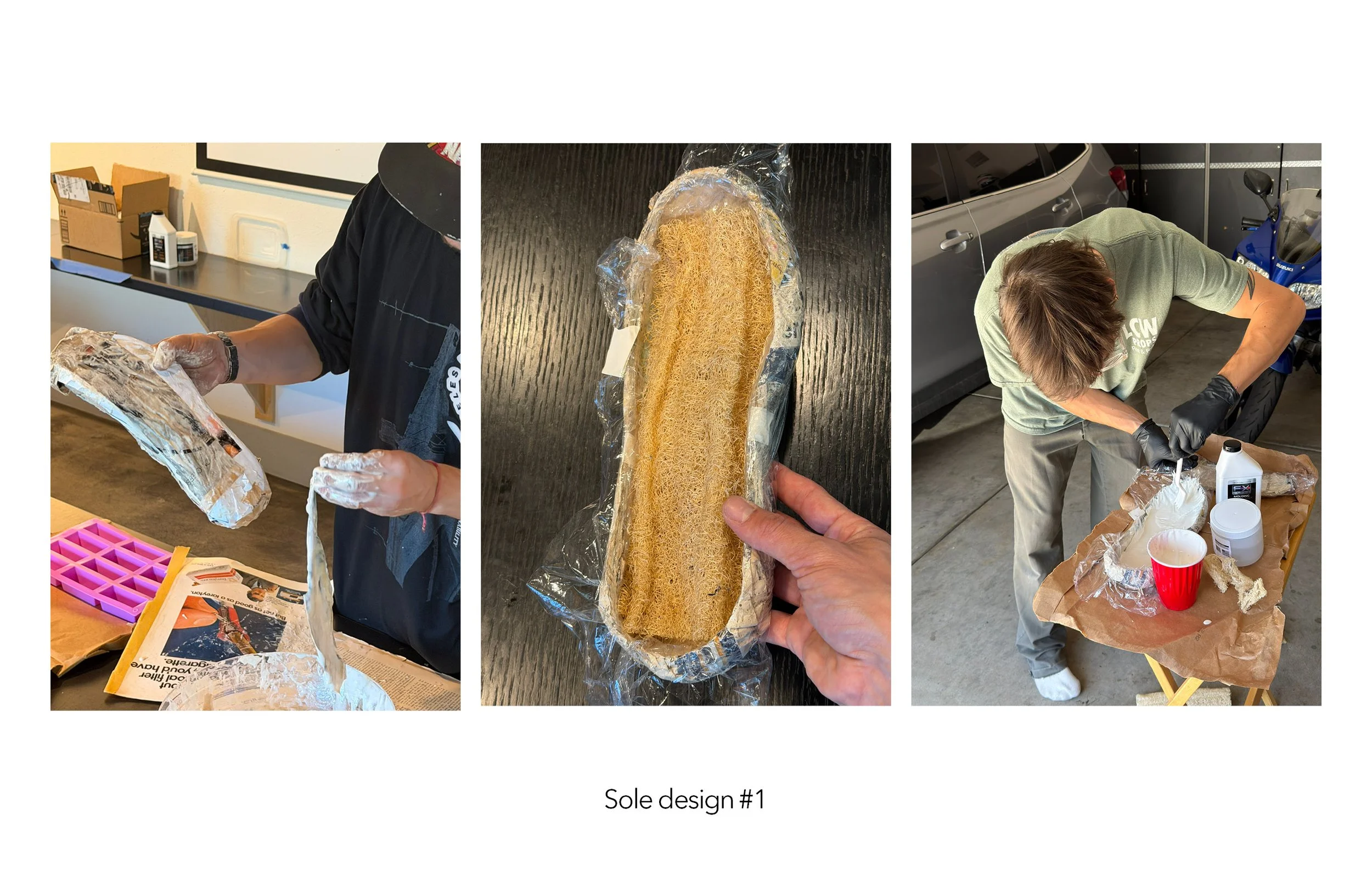
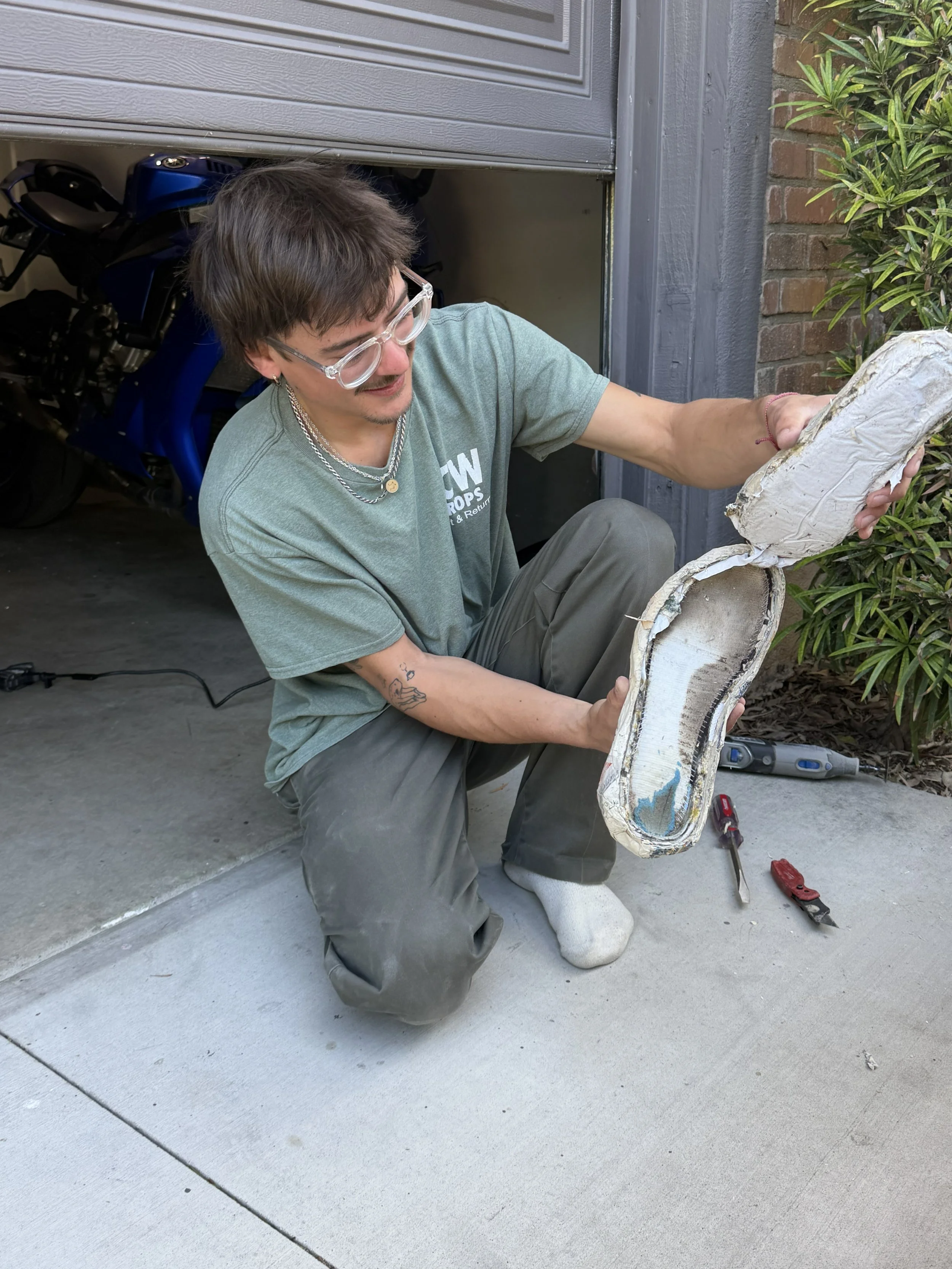
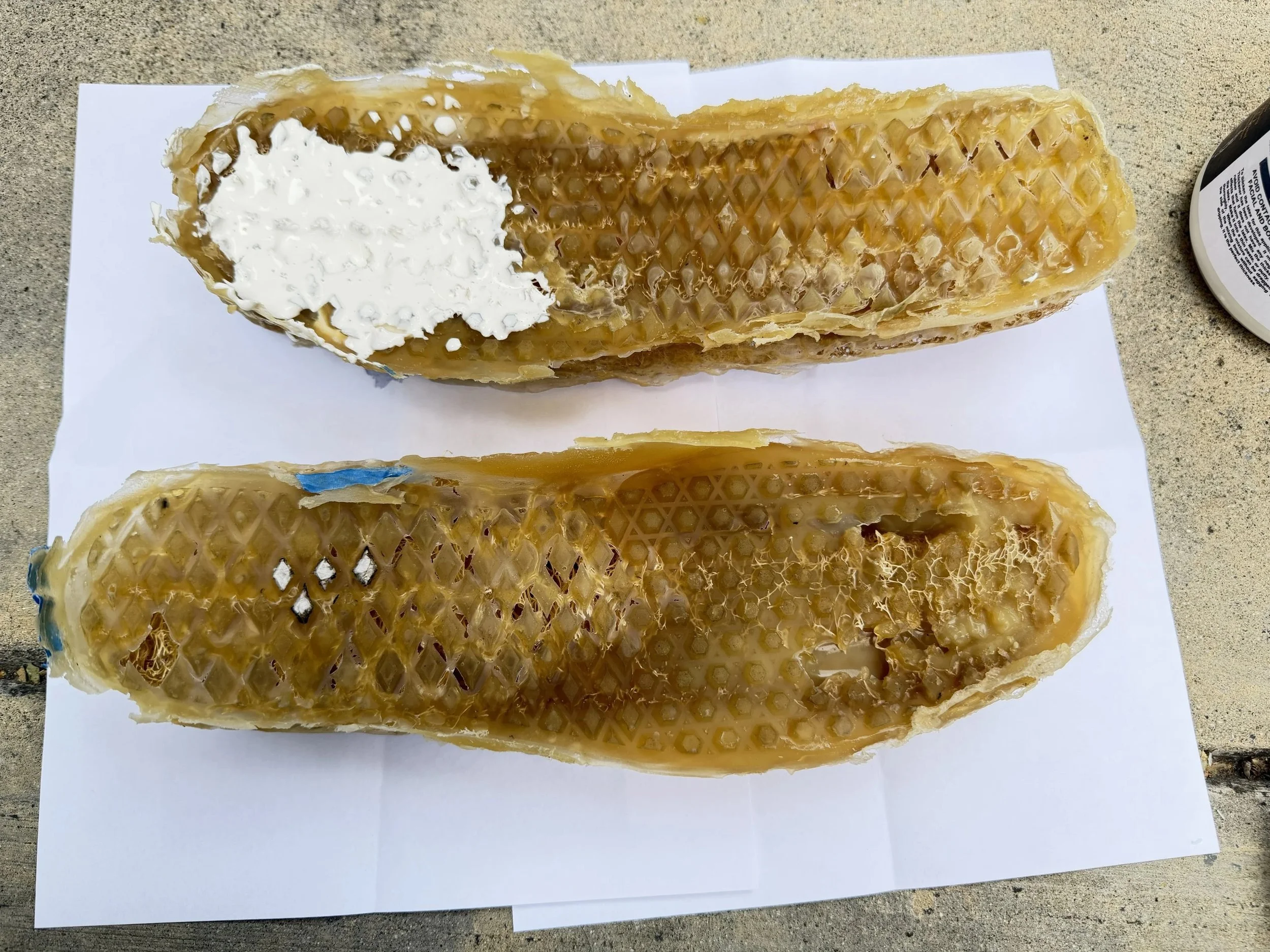
With loofa being the chosen material, two designs were chosen for the molding. One made from a flour/water paper mache mold around the sole of an old sneaker; the other (used in final) was built off of the bottom of another old shoe.
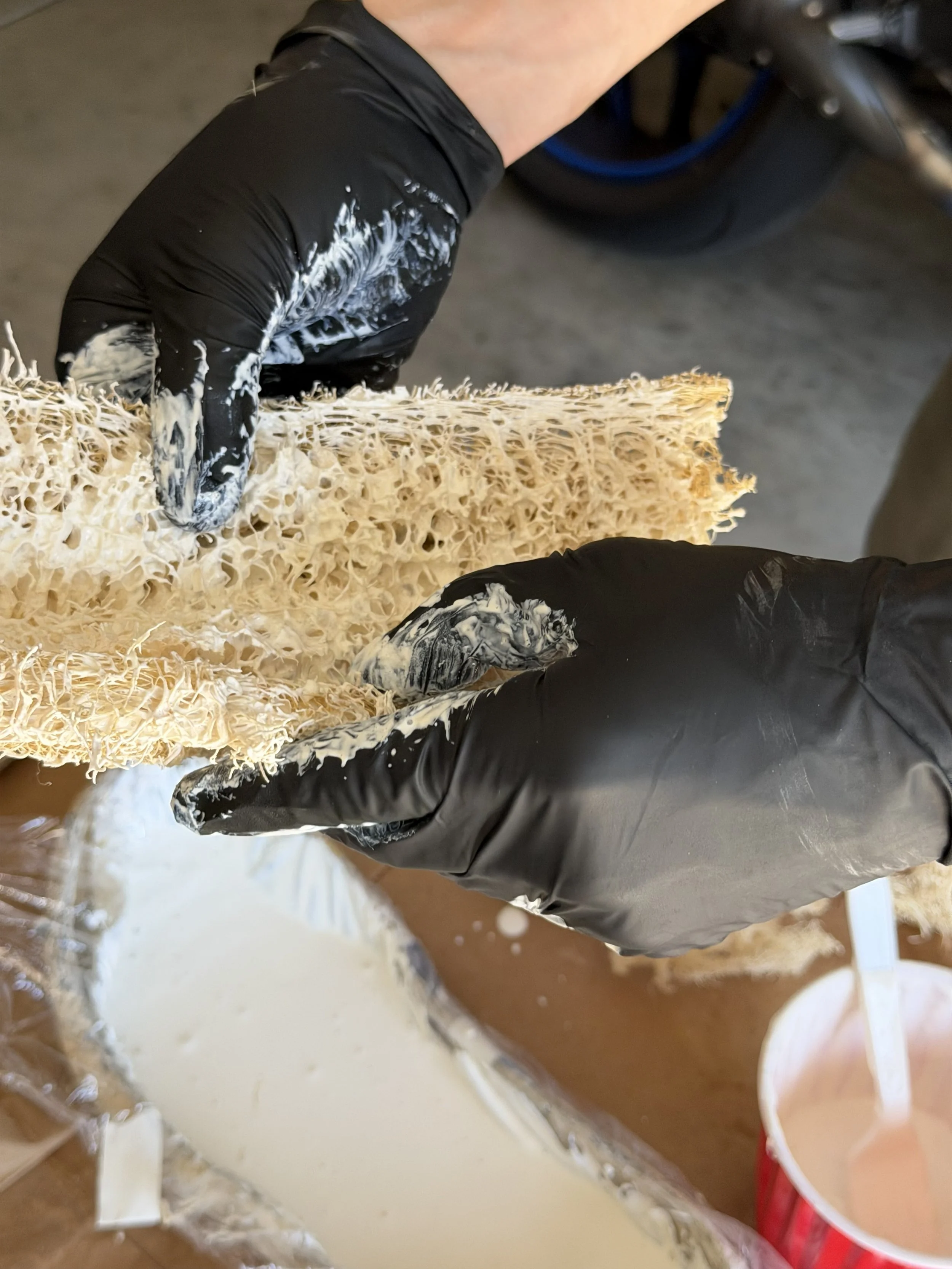
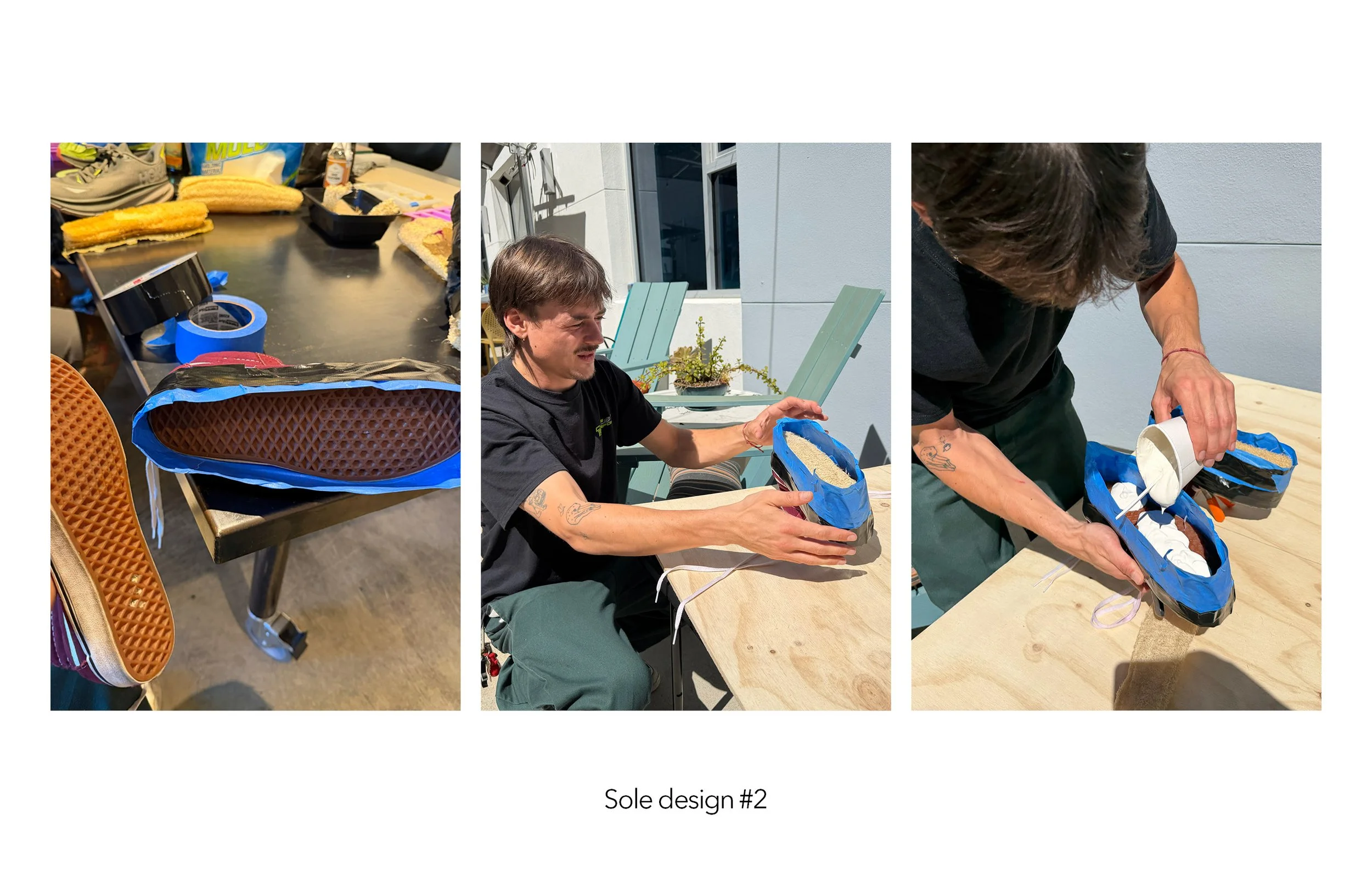
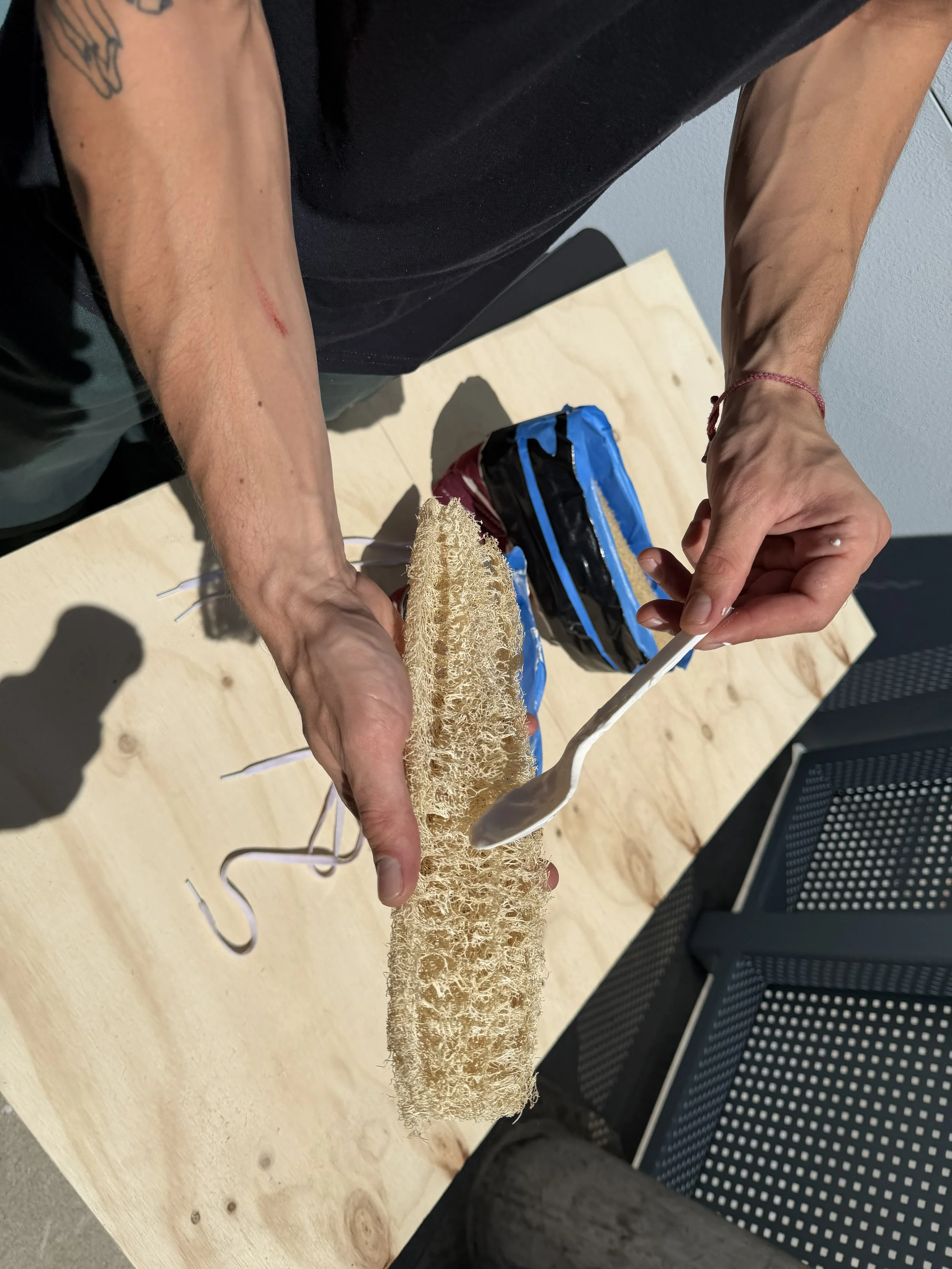
This process called for a lot of patience. While the paper mache mold air dried I cycled the second design through a toaster oven on low which slightly improved the dry time.
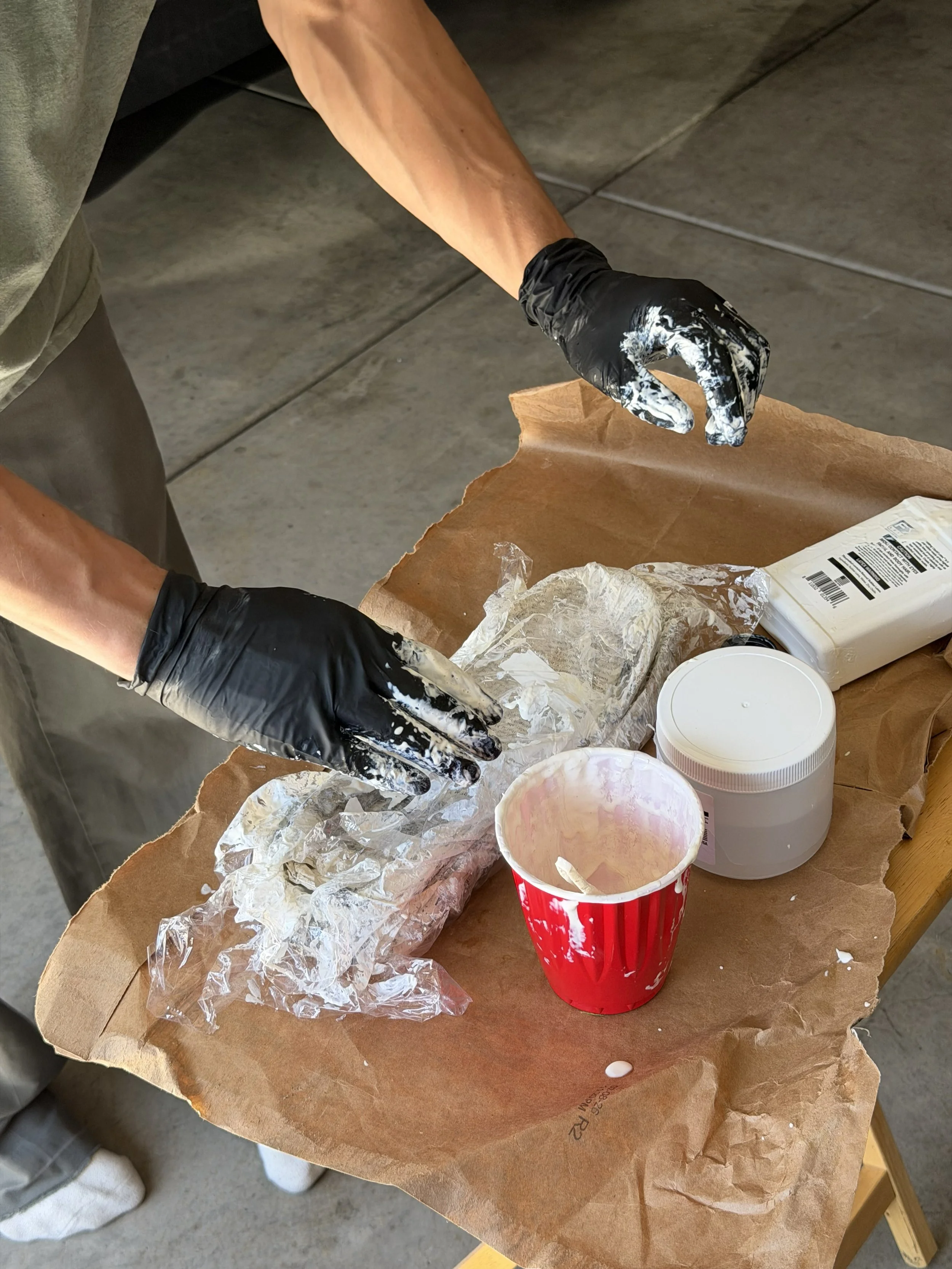
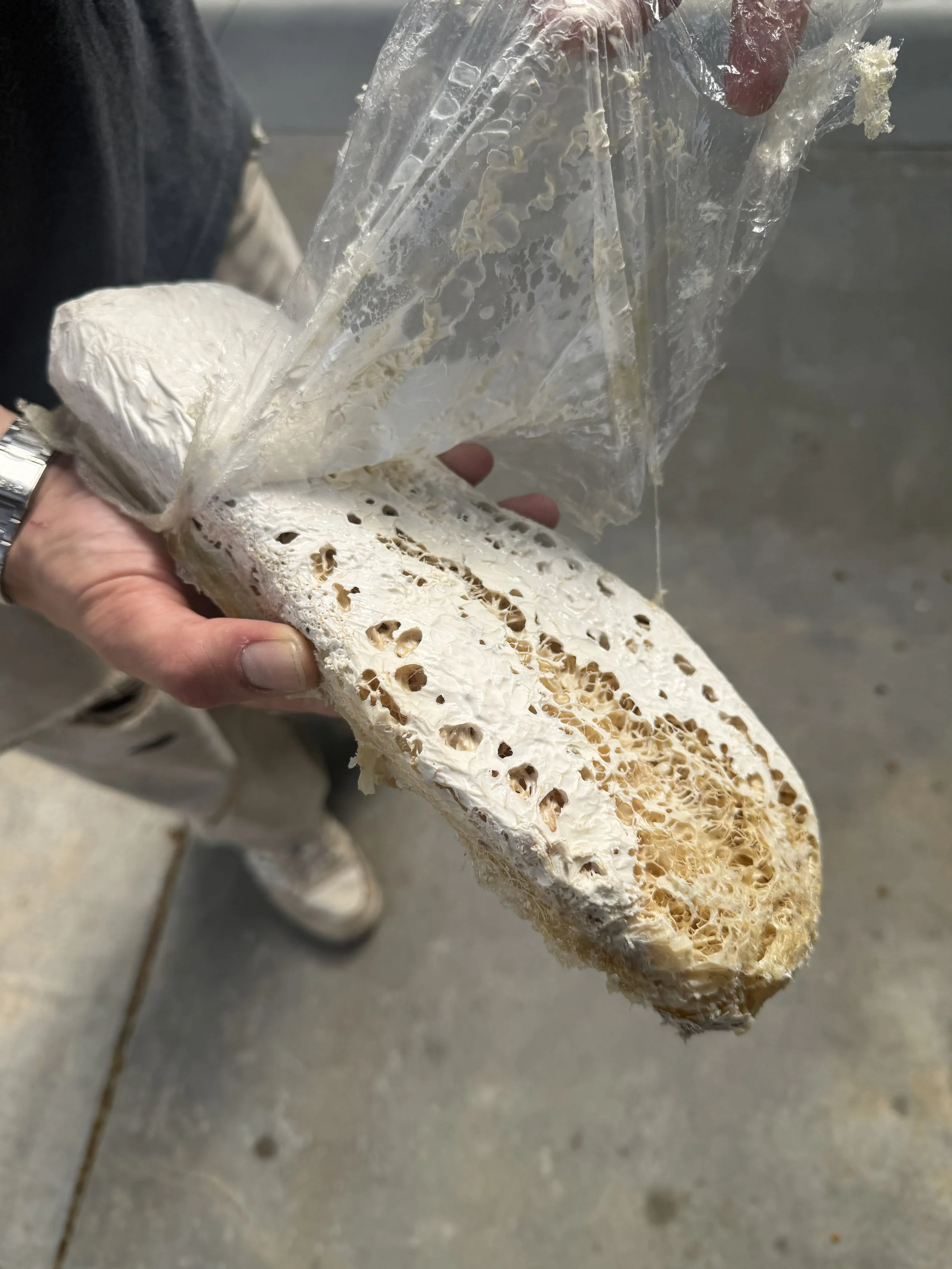
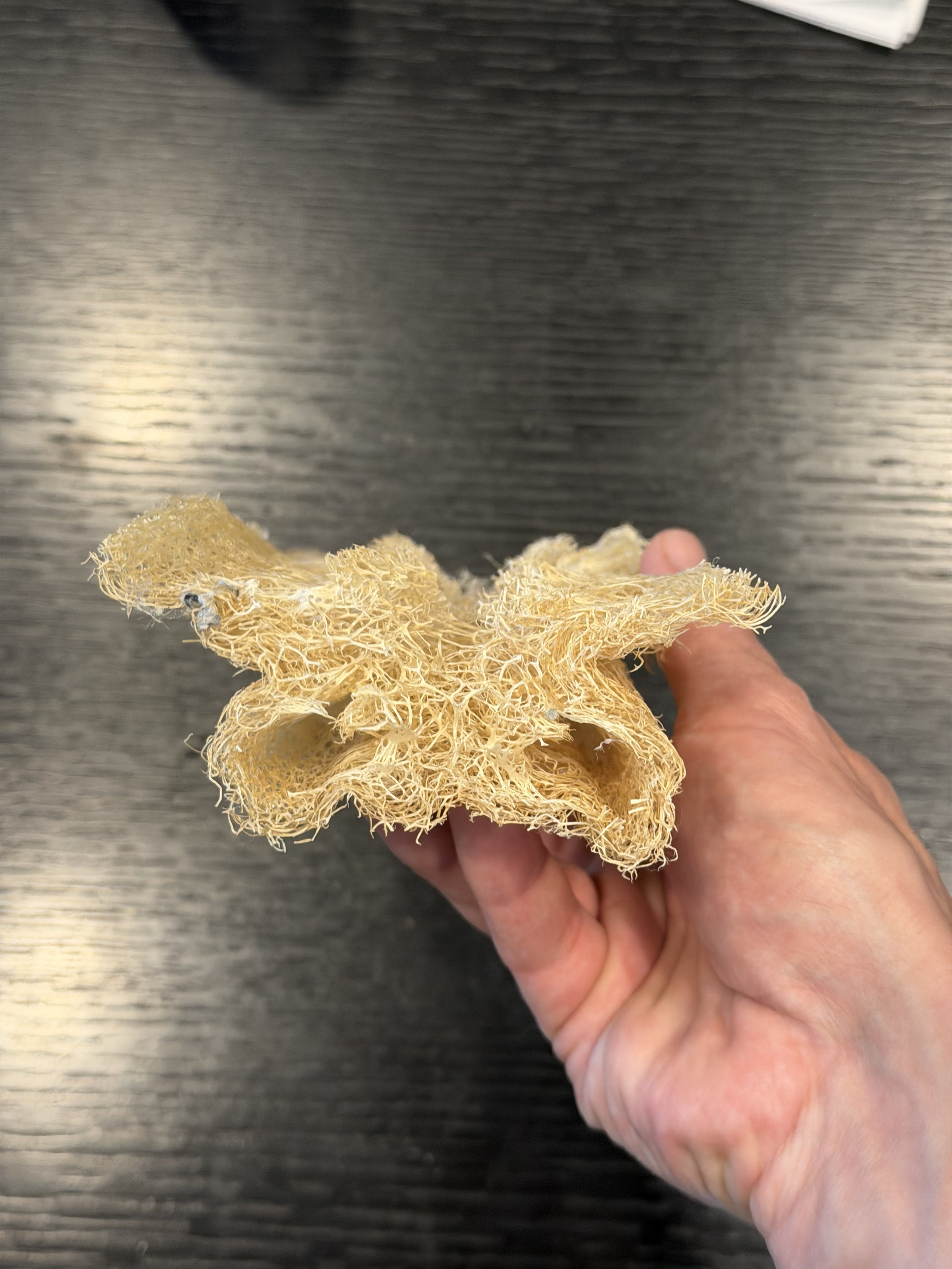
With sole #2 fully dried I used a DIY process for vulcanization, which transforms the soft rubber into a more durable form, using a pressure cooker to achieve the heat and pressure needed.
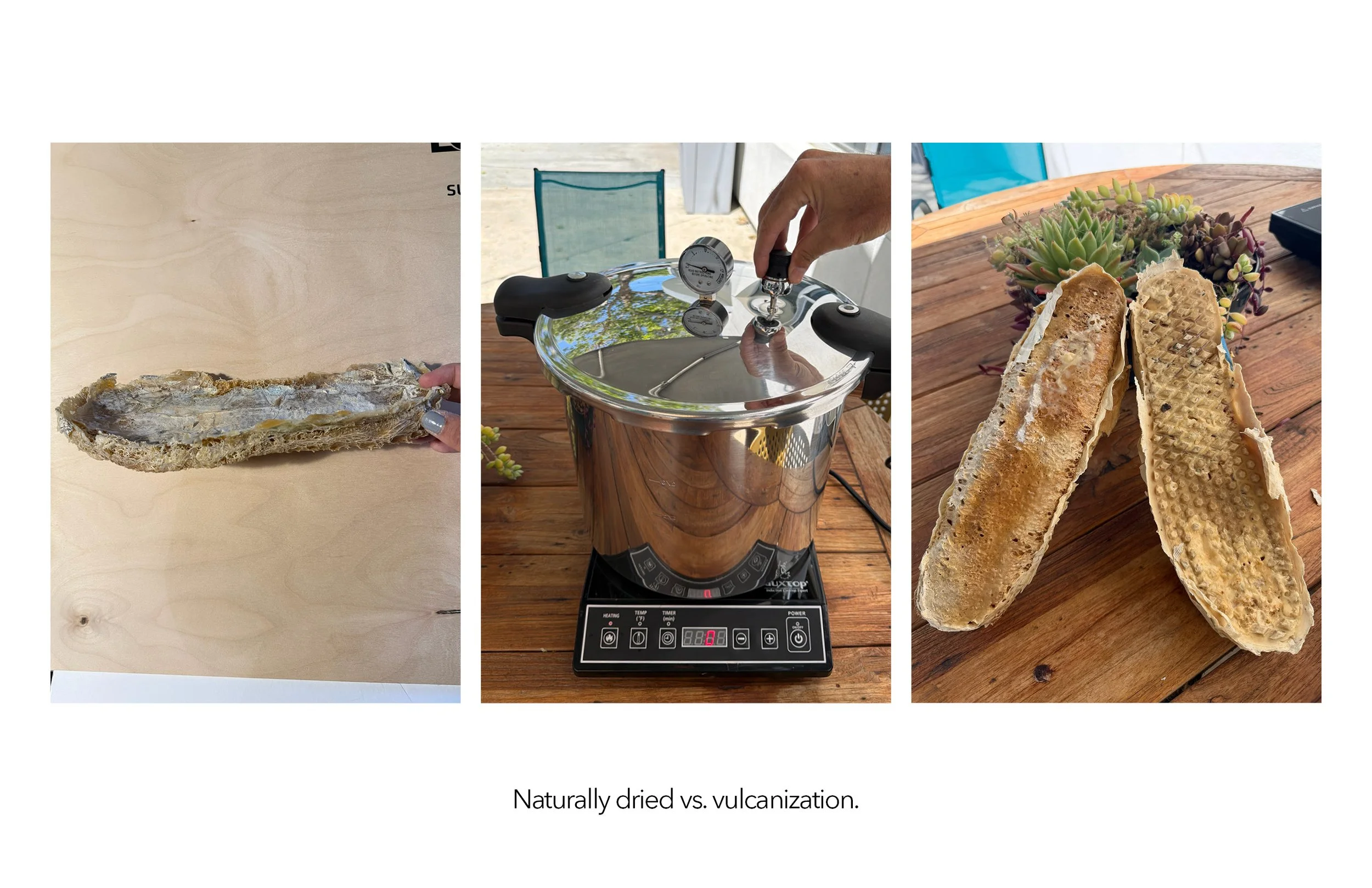
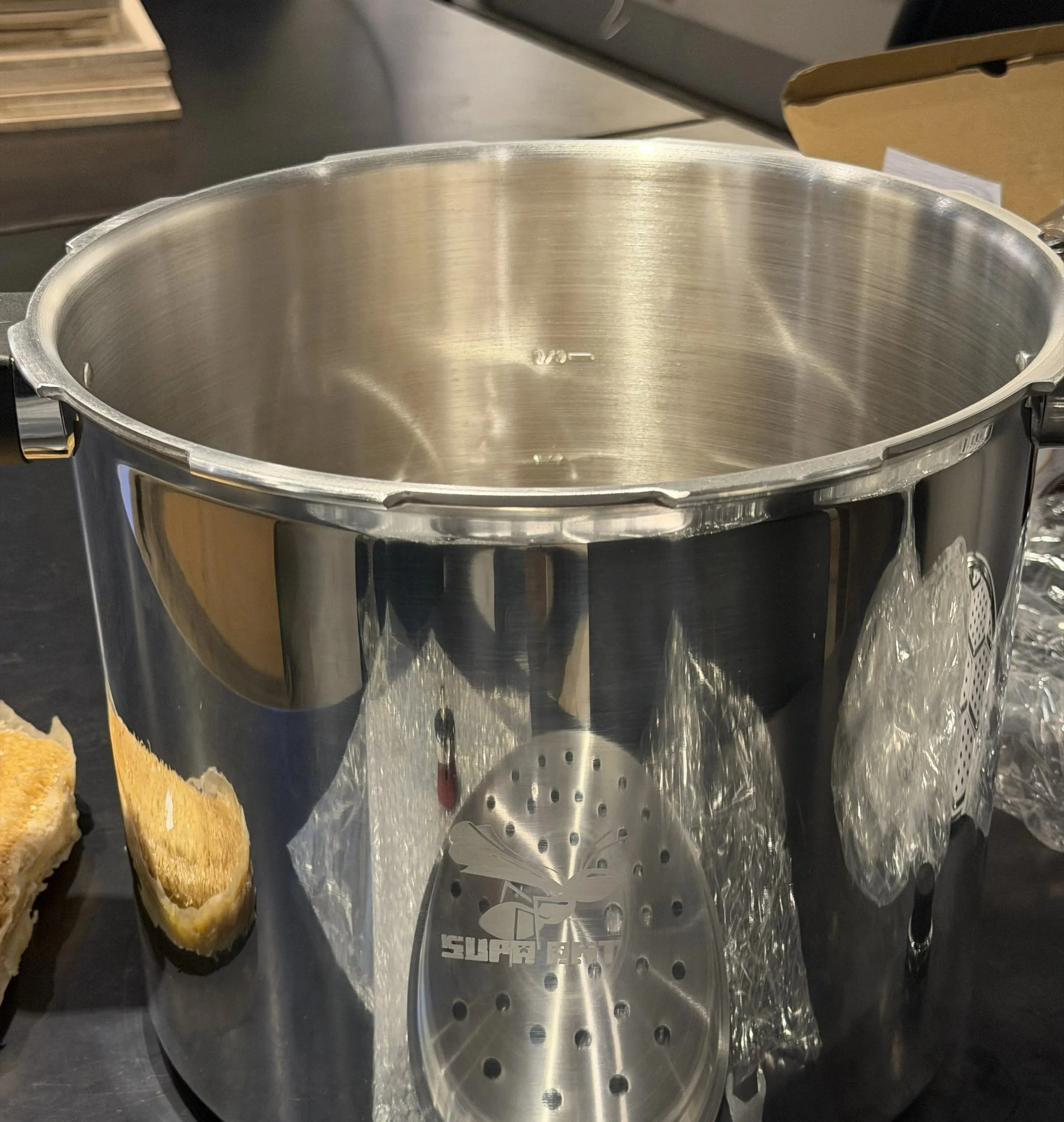
This process took about 1.5 months due to exploration, diy techniques, and other classes.
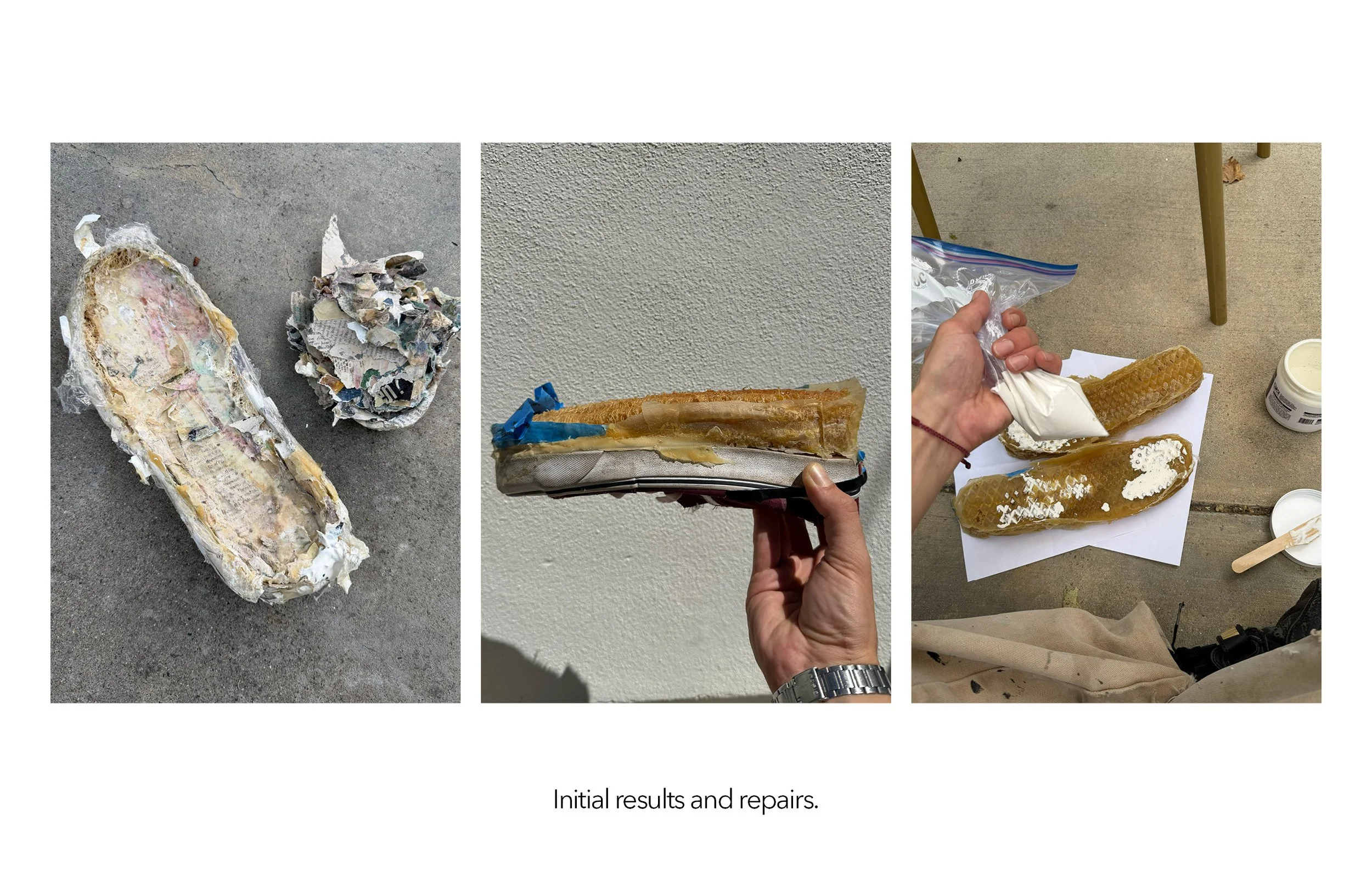
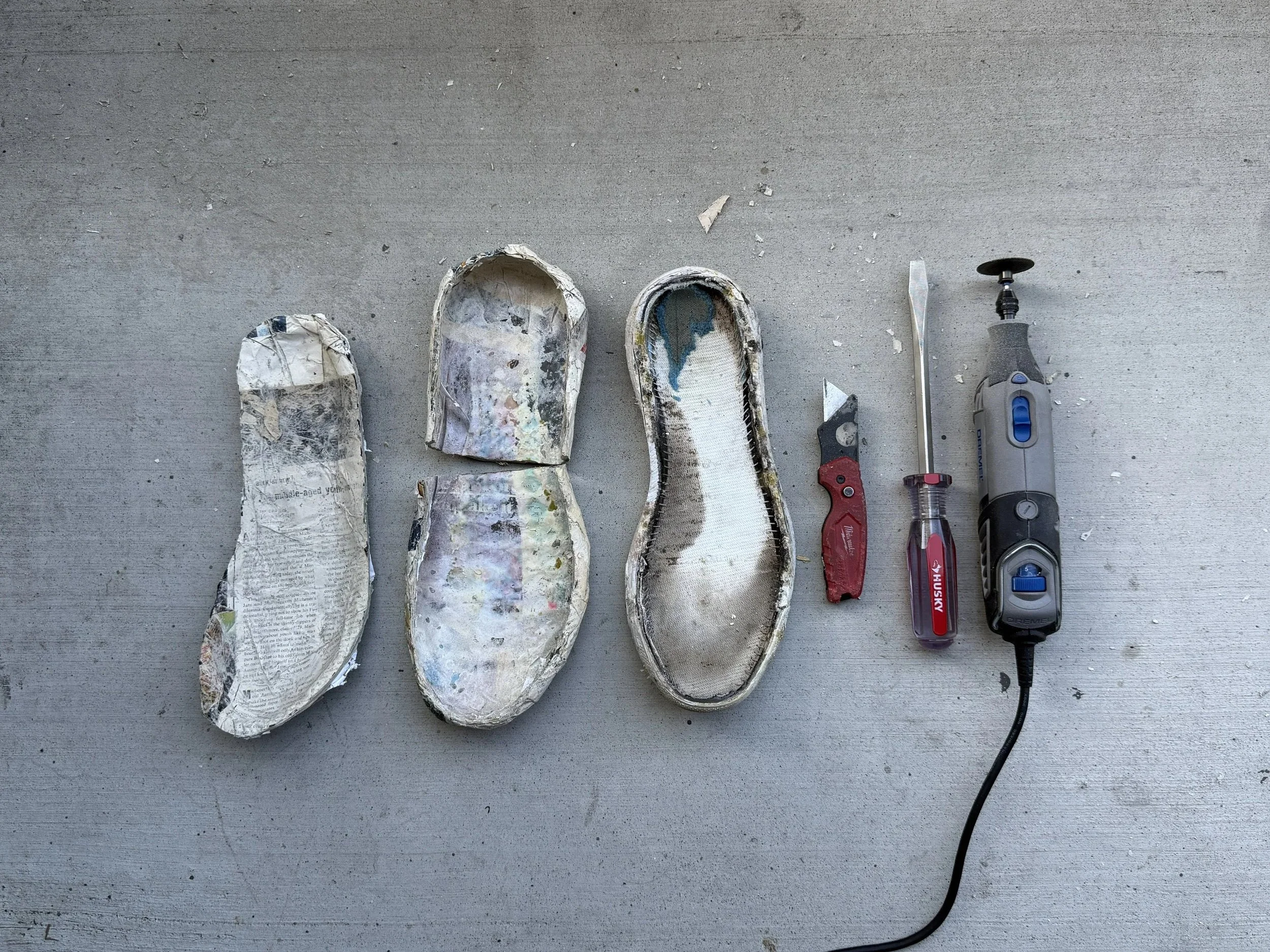
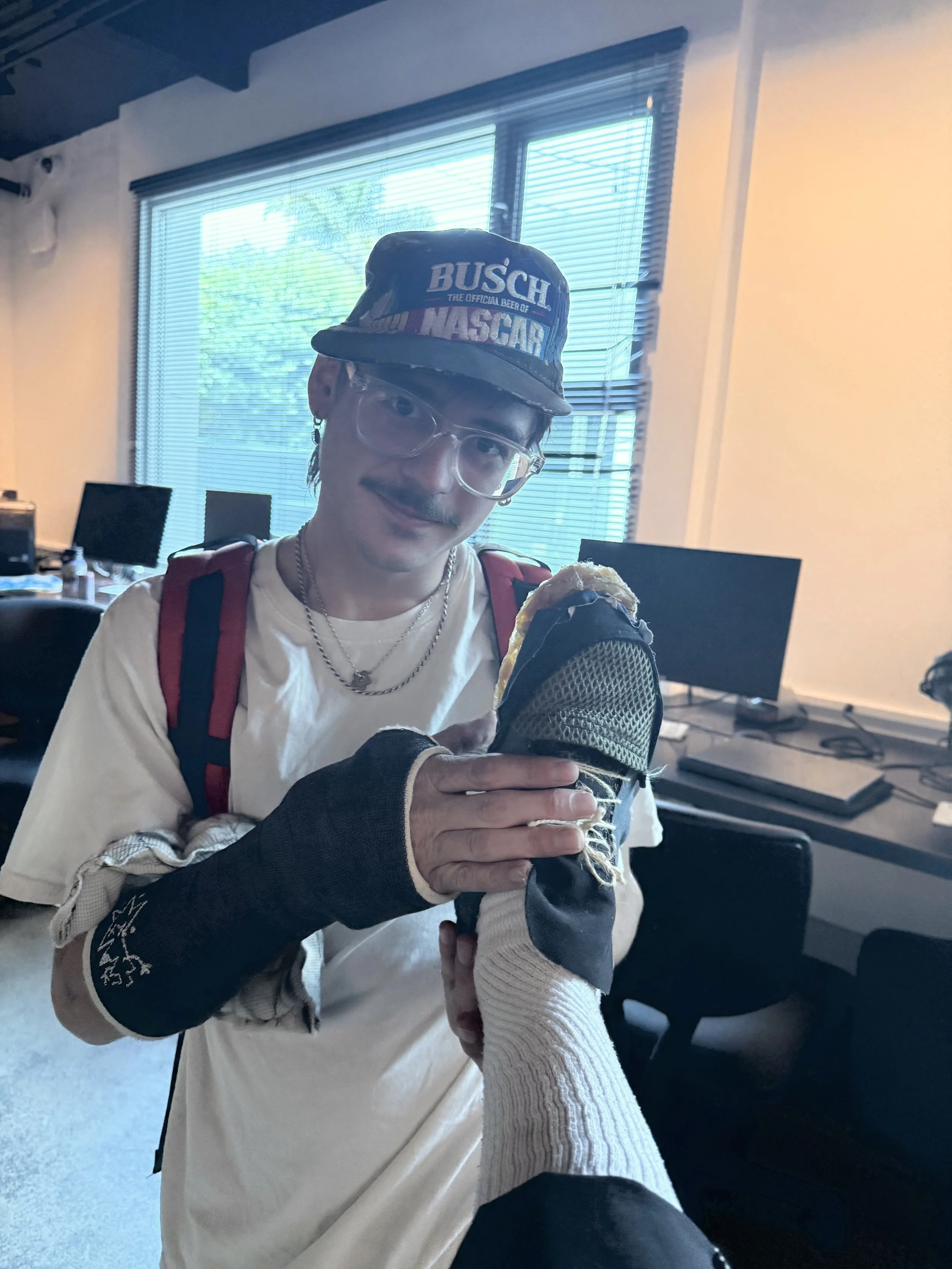
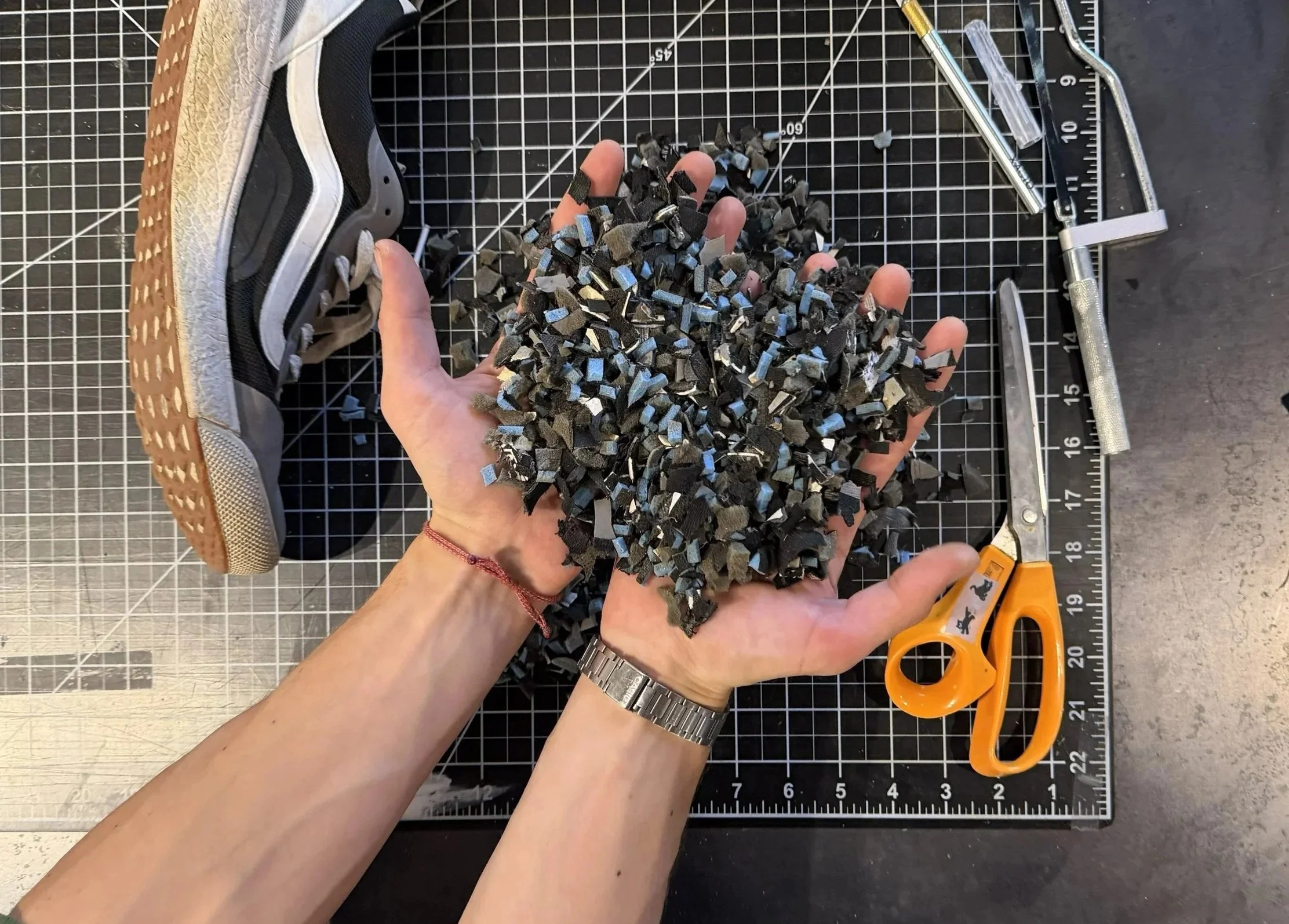
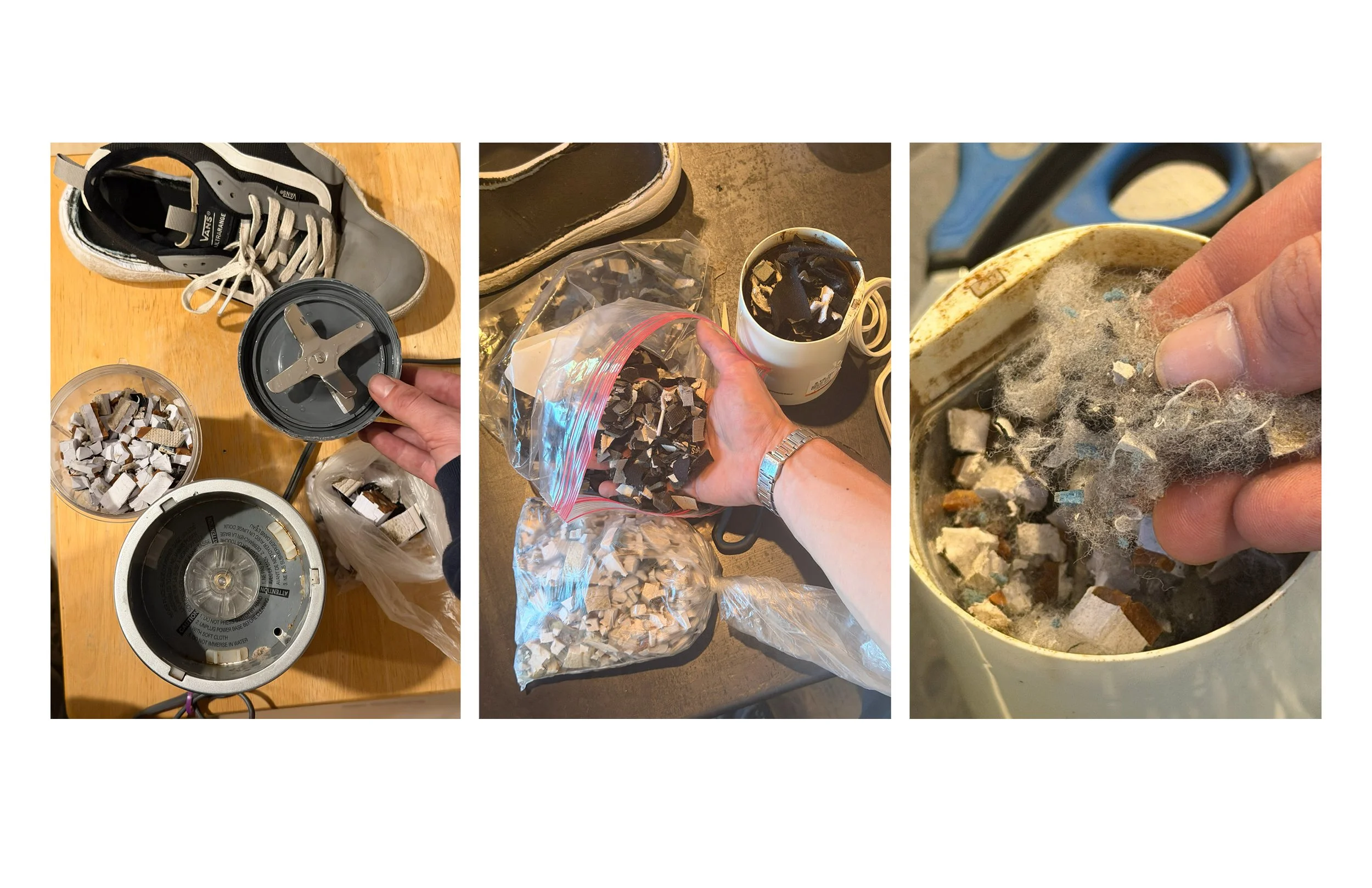
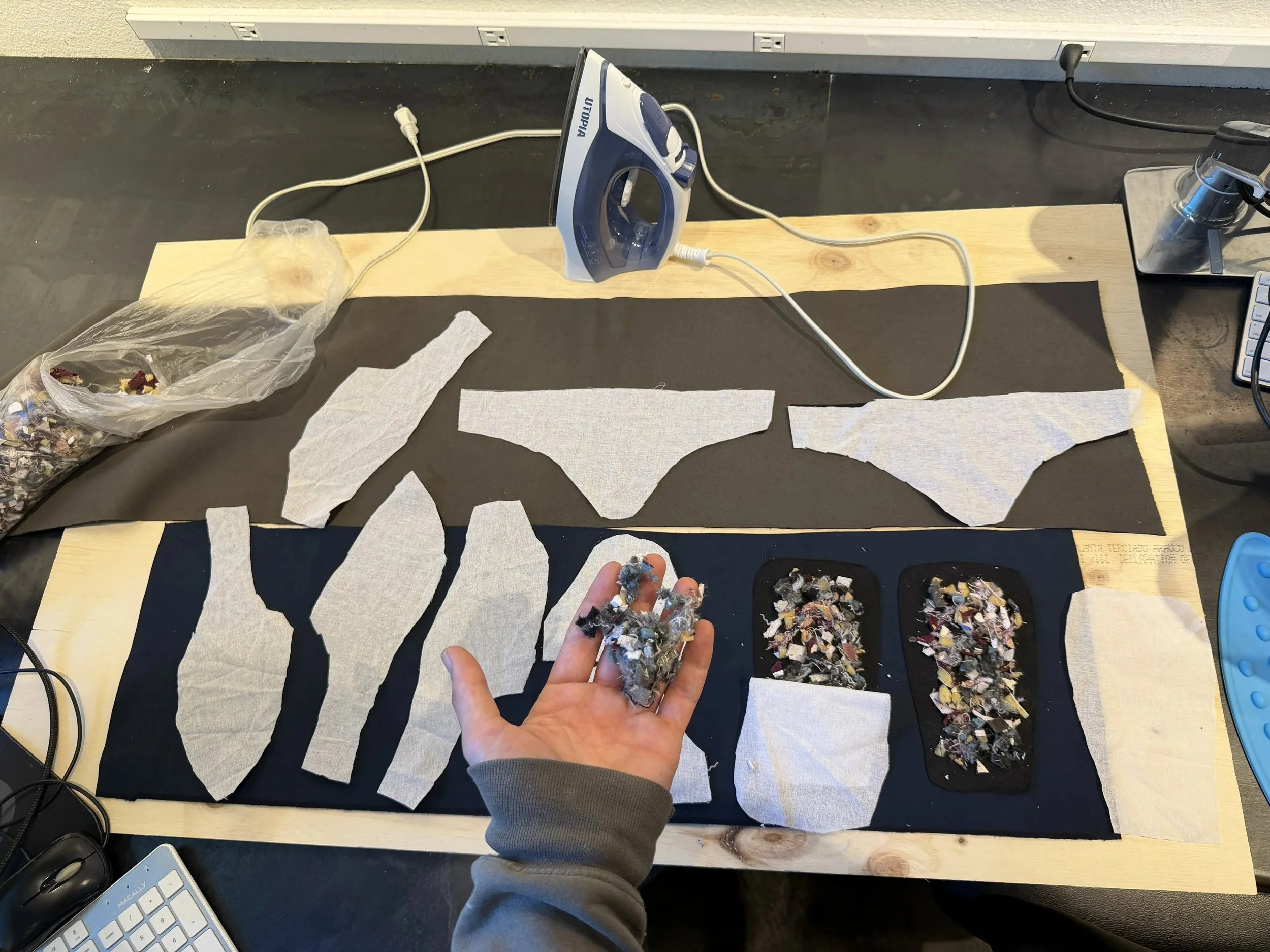
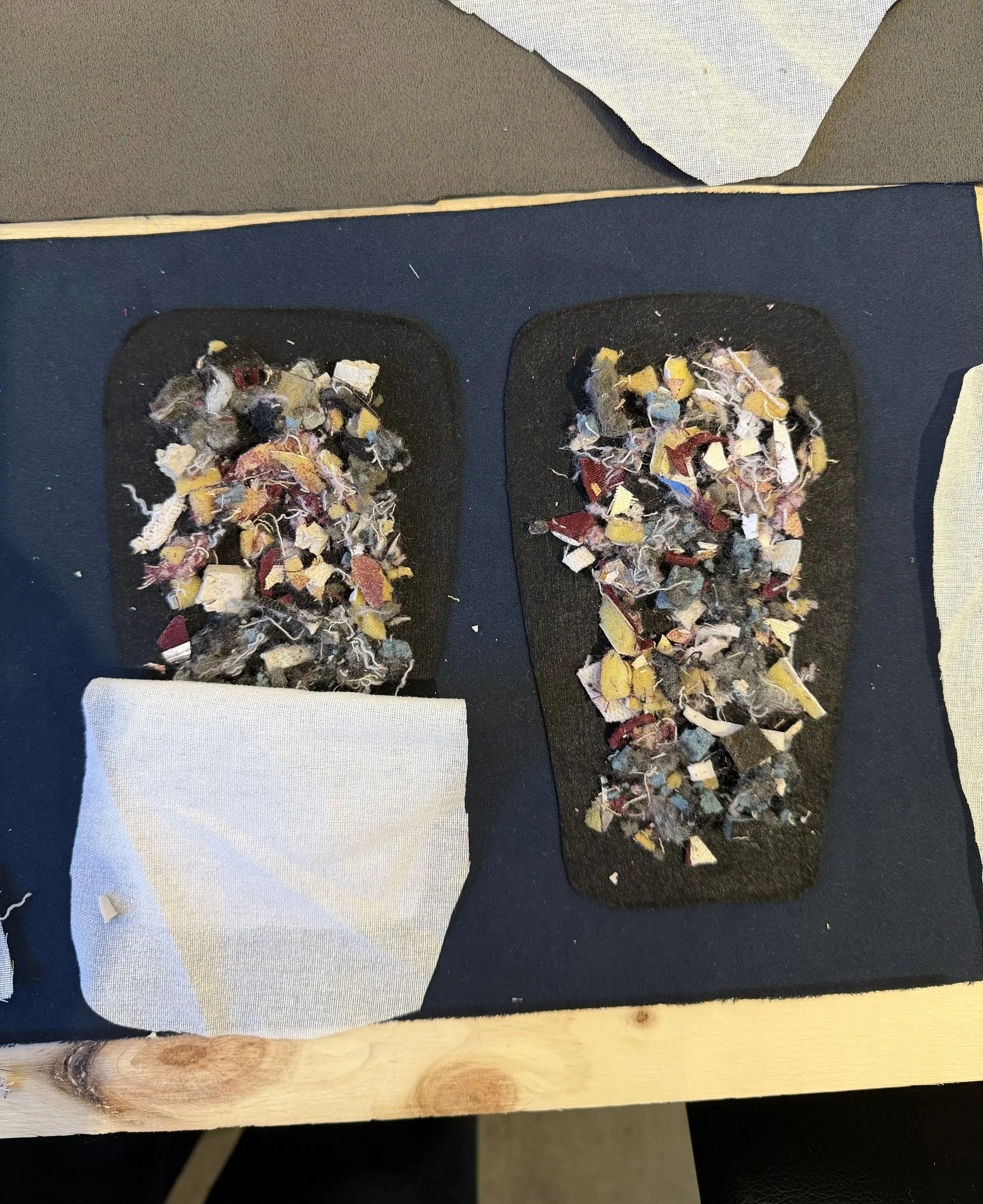
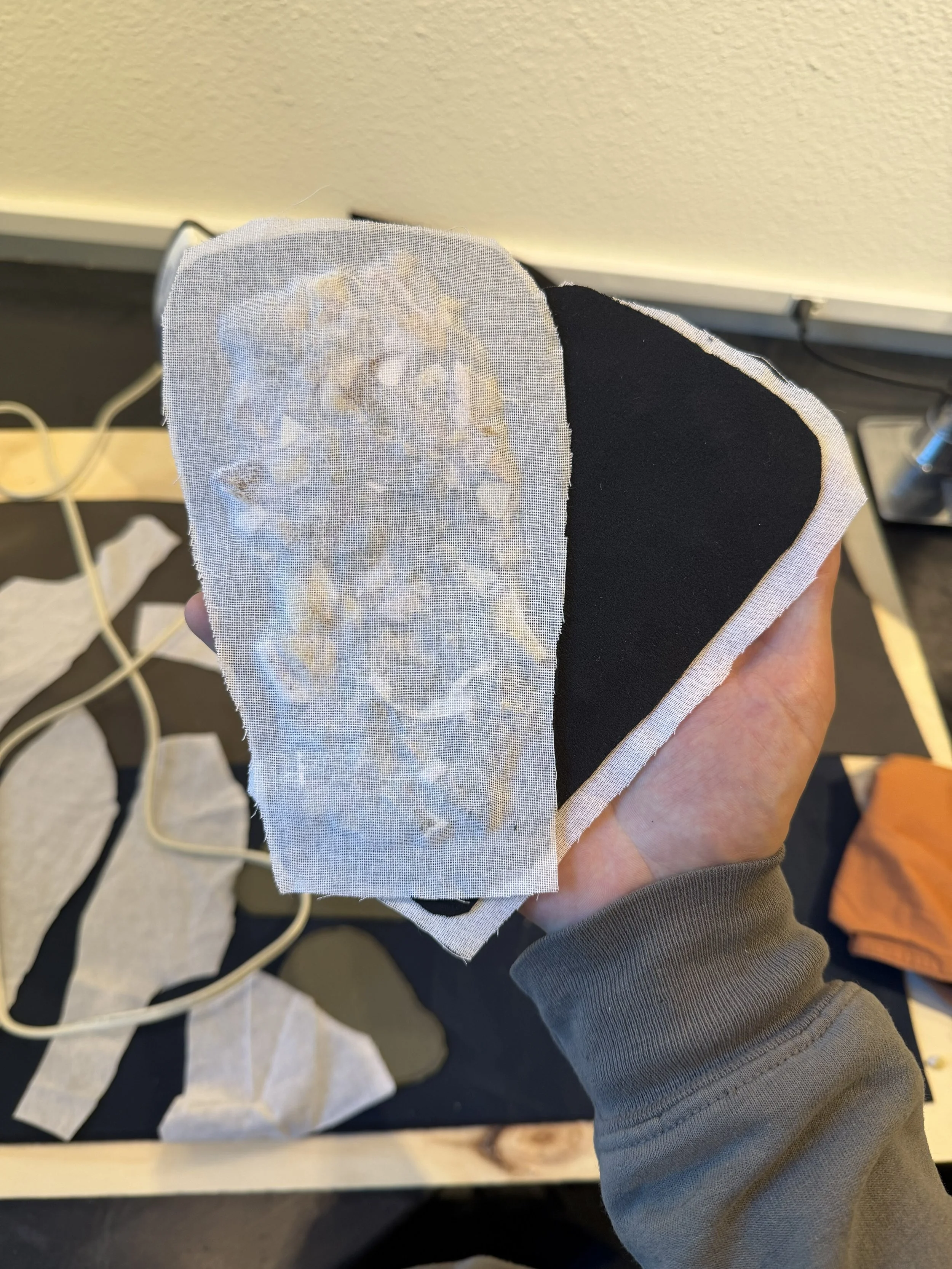
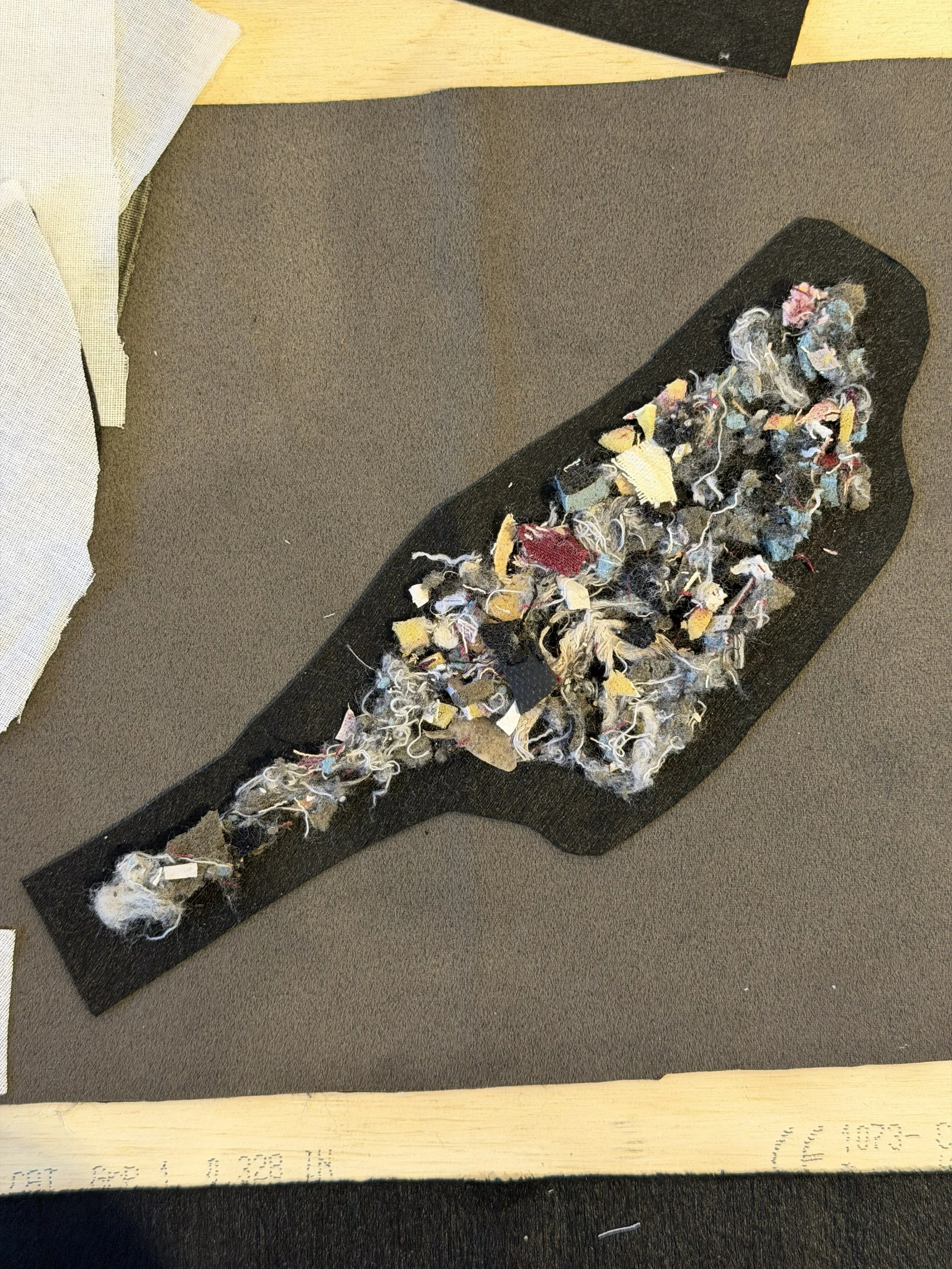
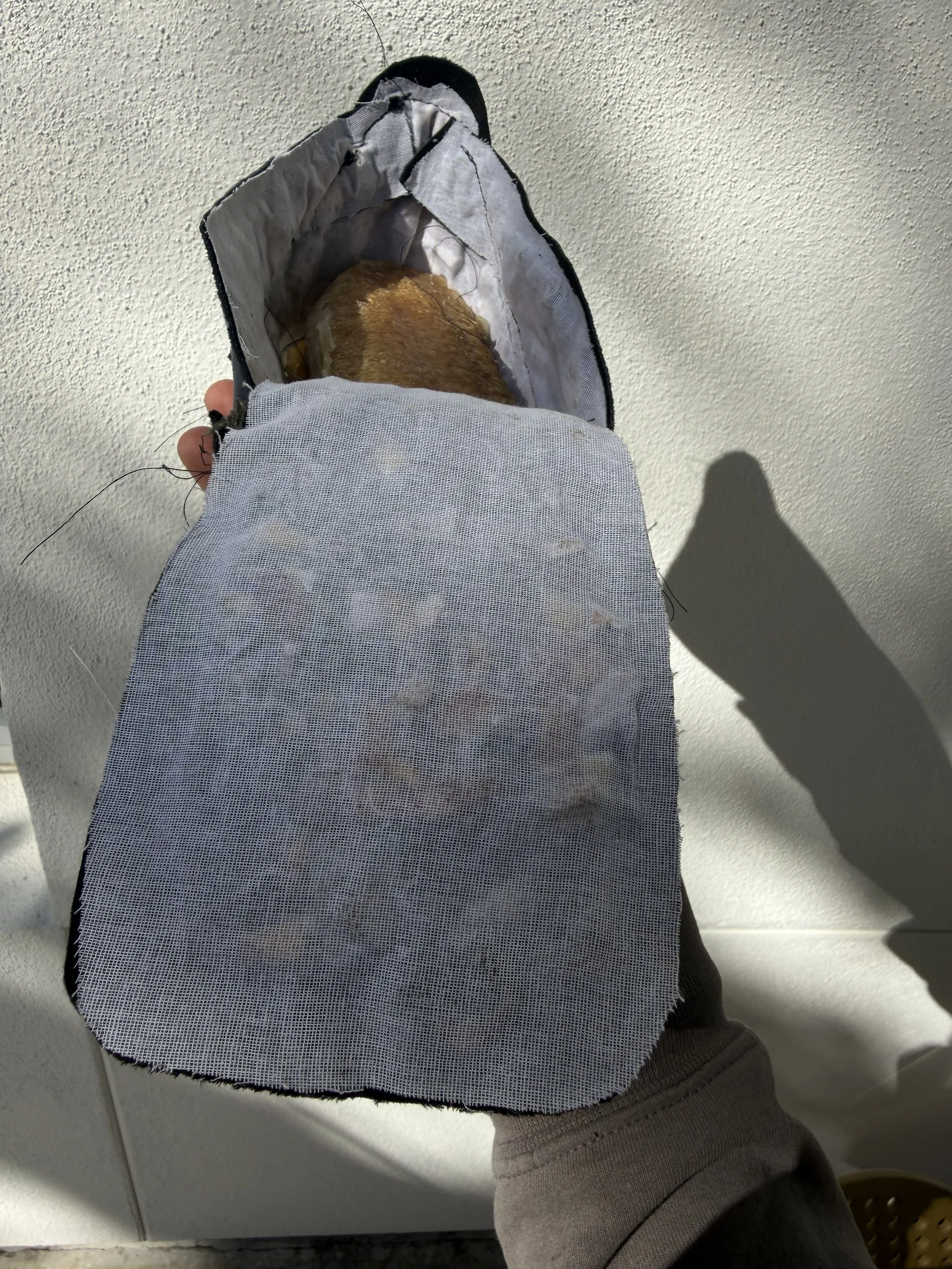
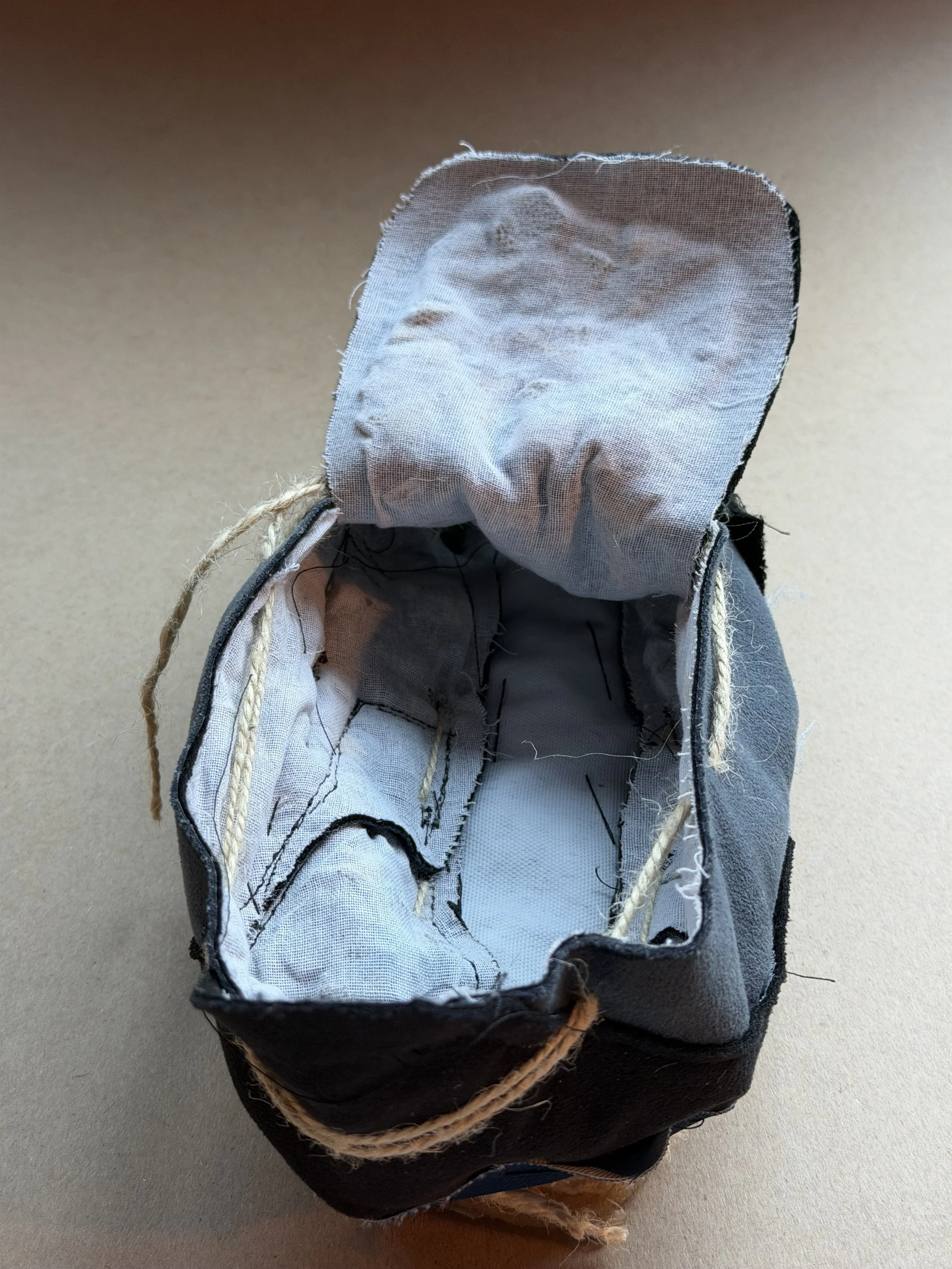
On creation of the upper; my main goal was to directly clean up the current footwear waste stream found in areas like the Atacama desert in Chile. I did this by shredding up a pair of shoes and utilizing the material as the insulation for the new shoe.
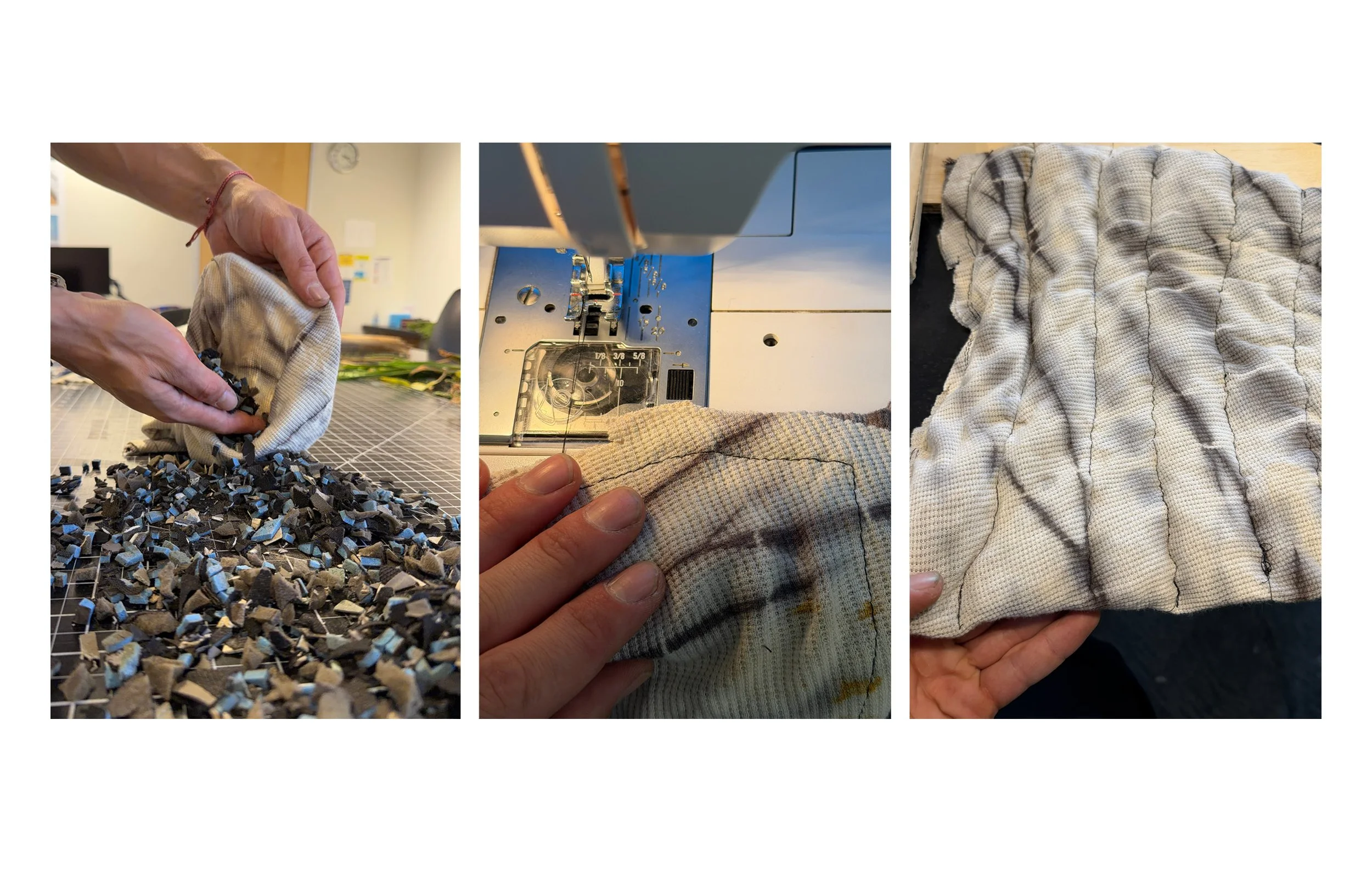
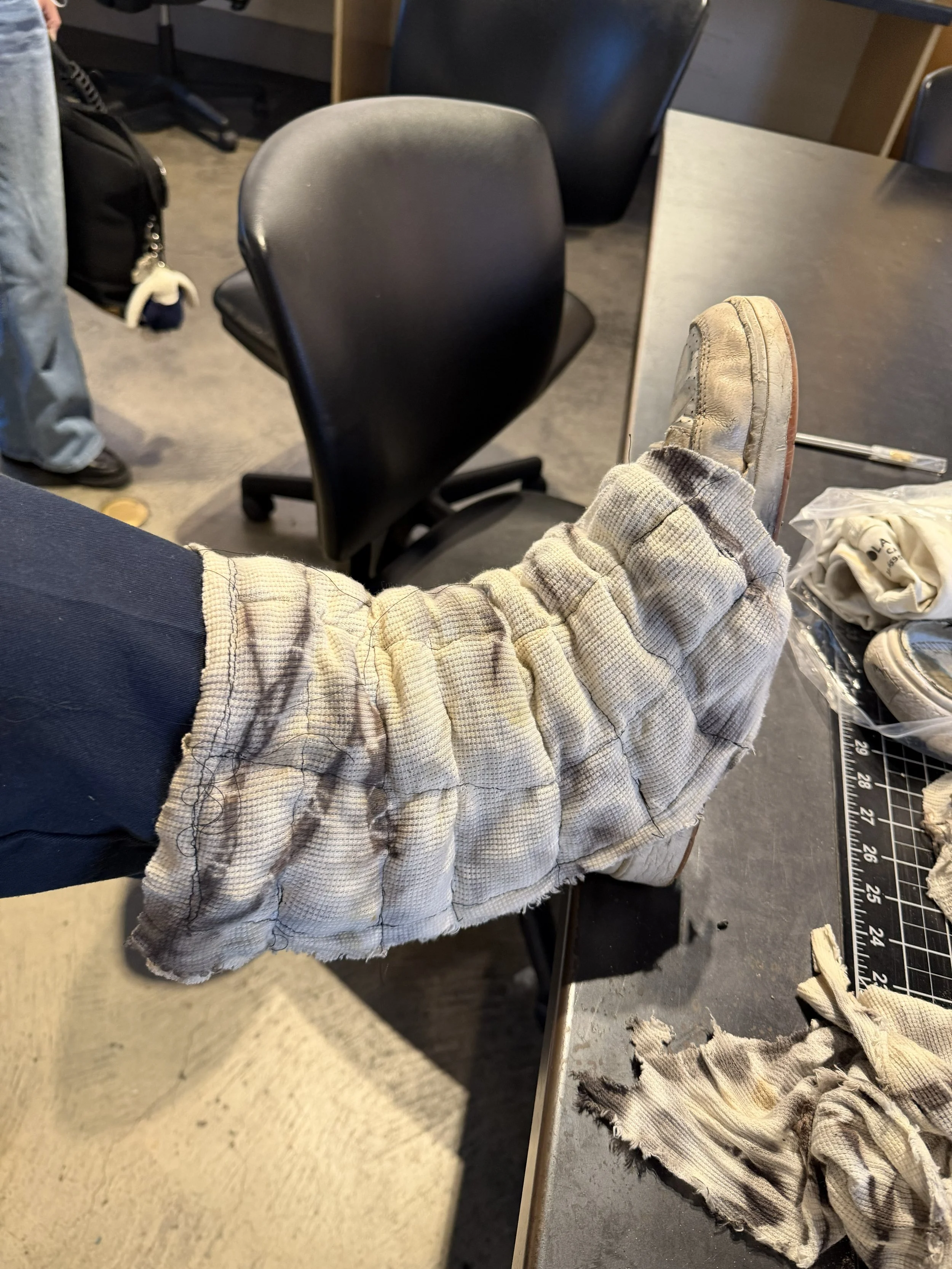
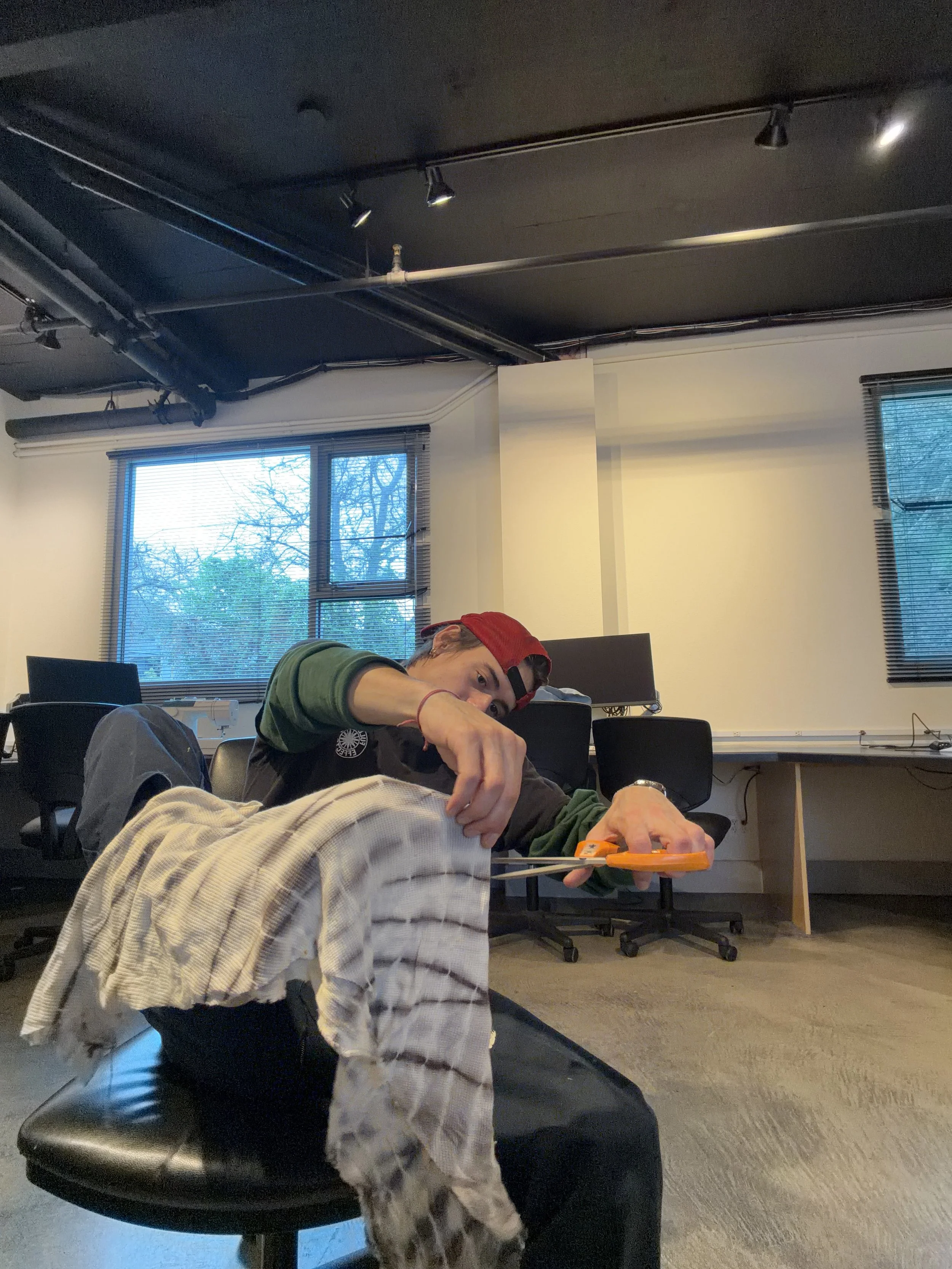
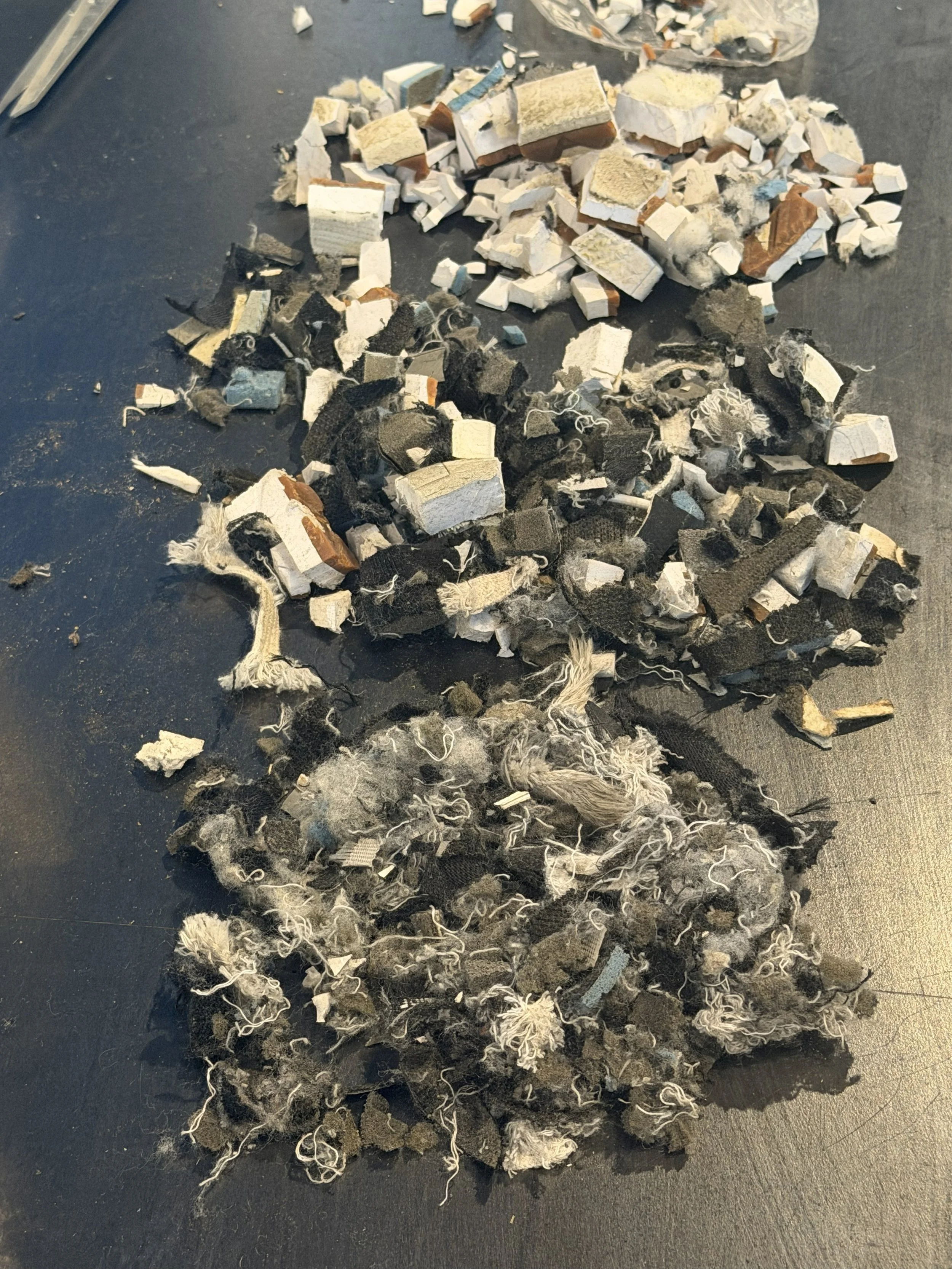
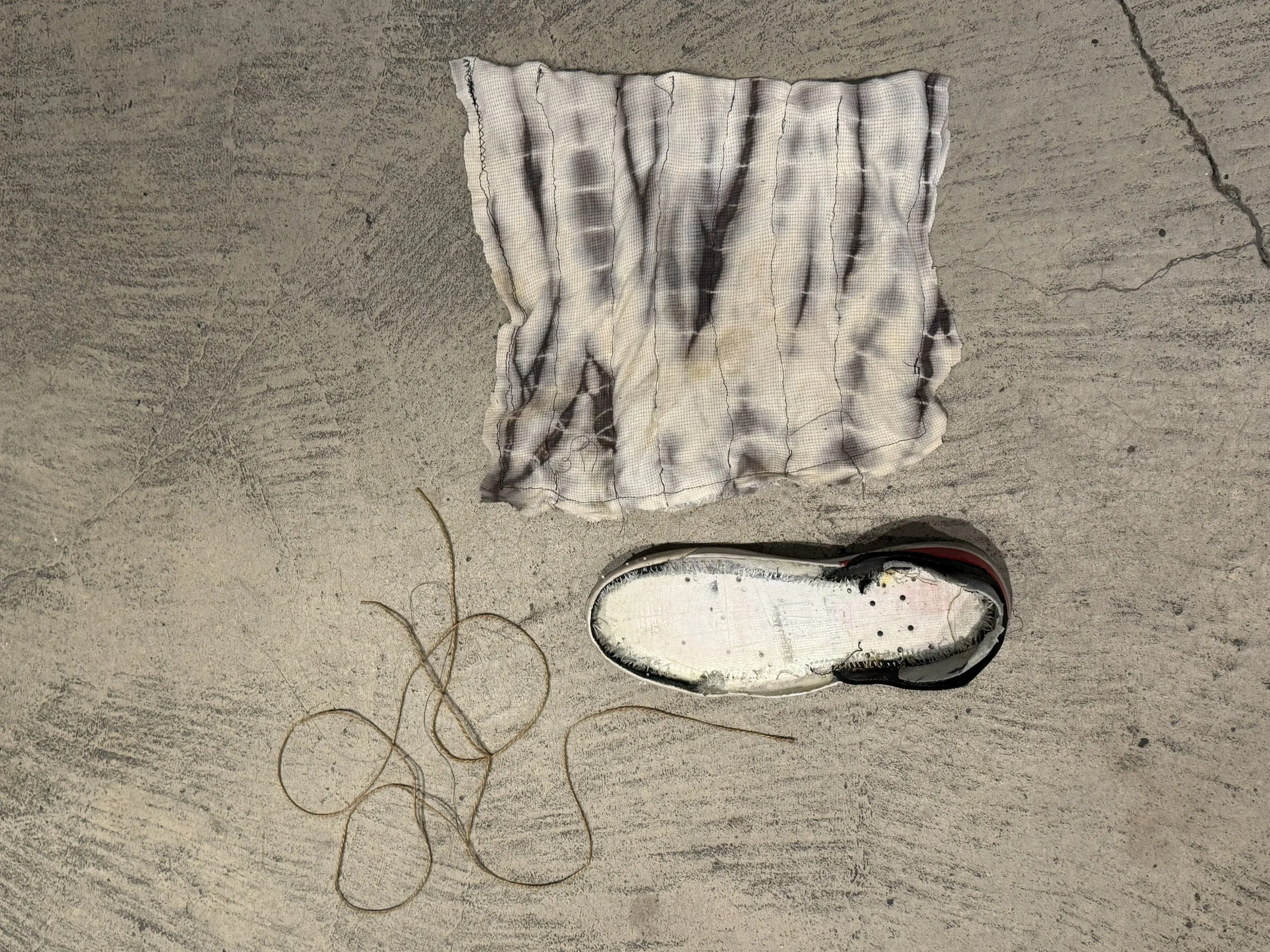
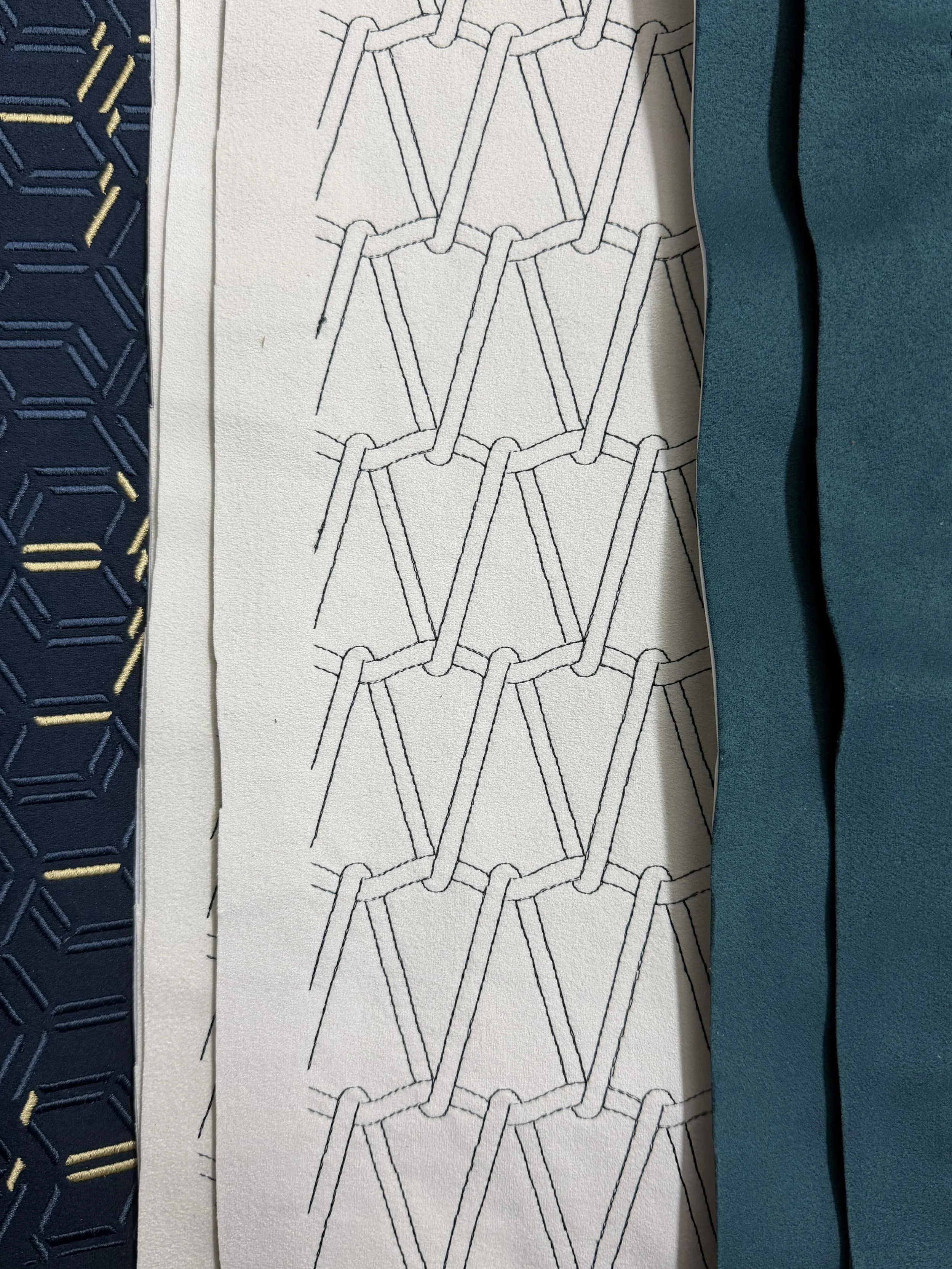
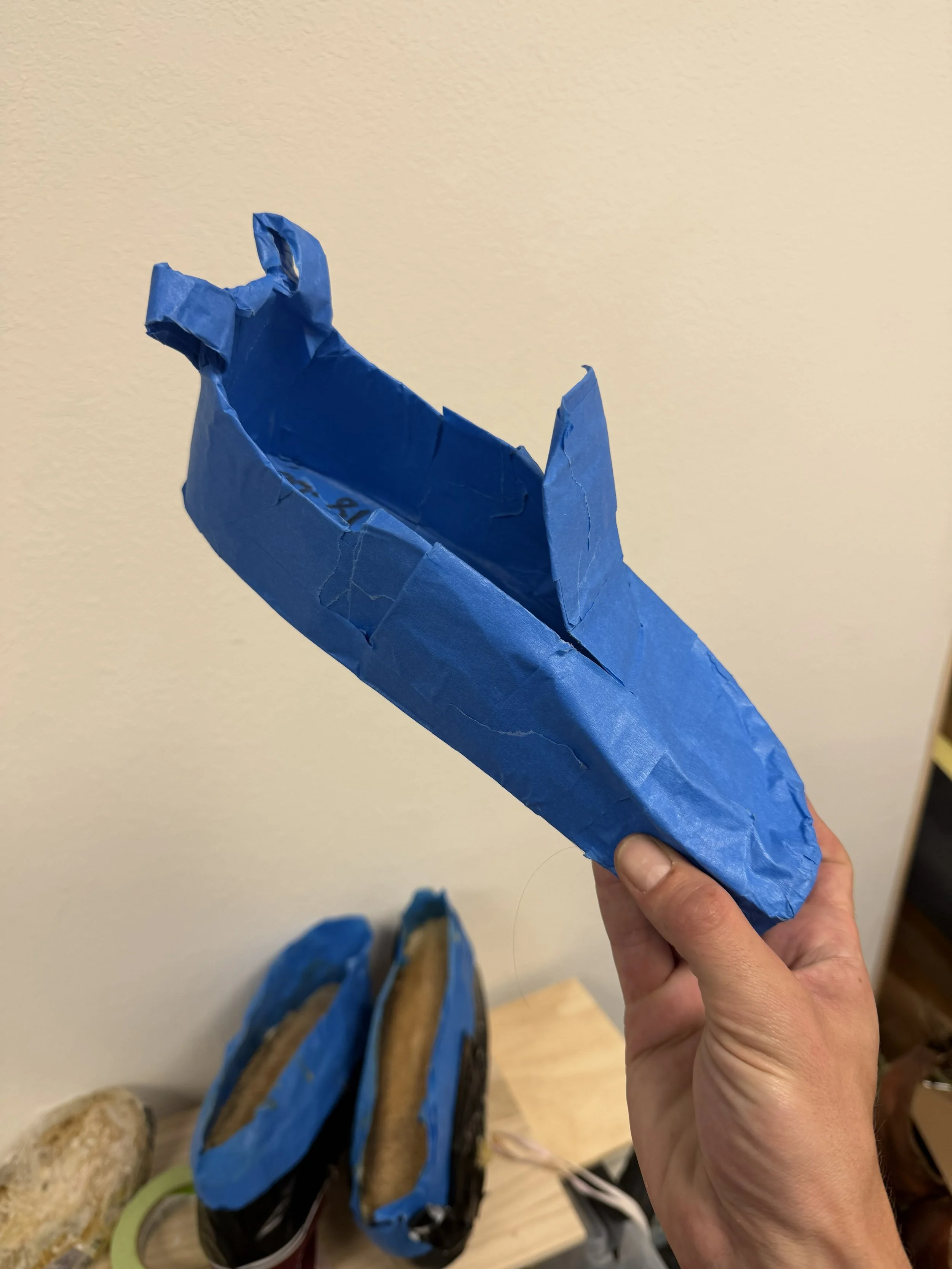
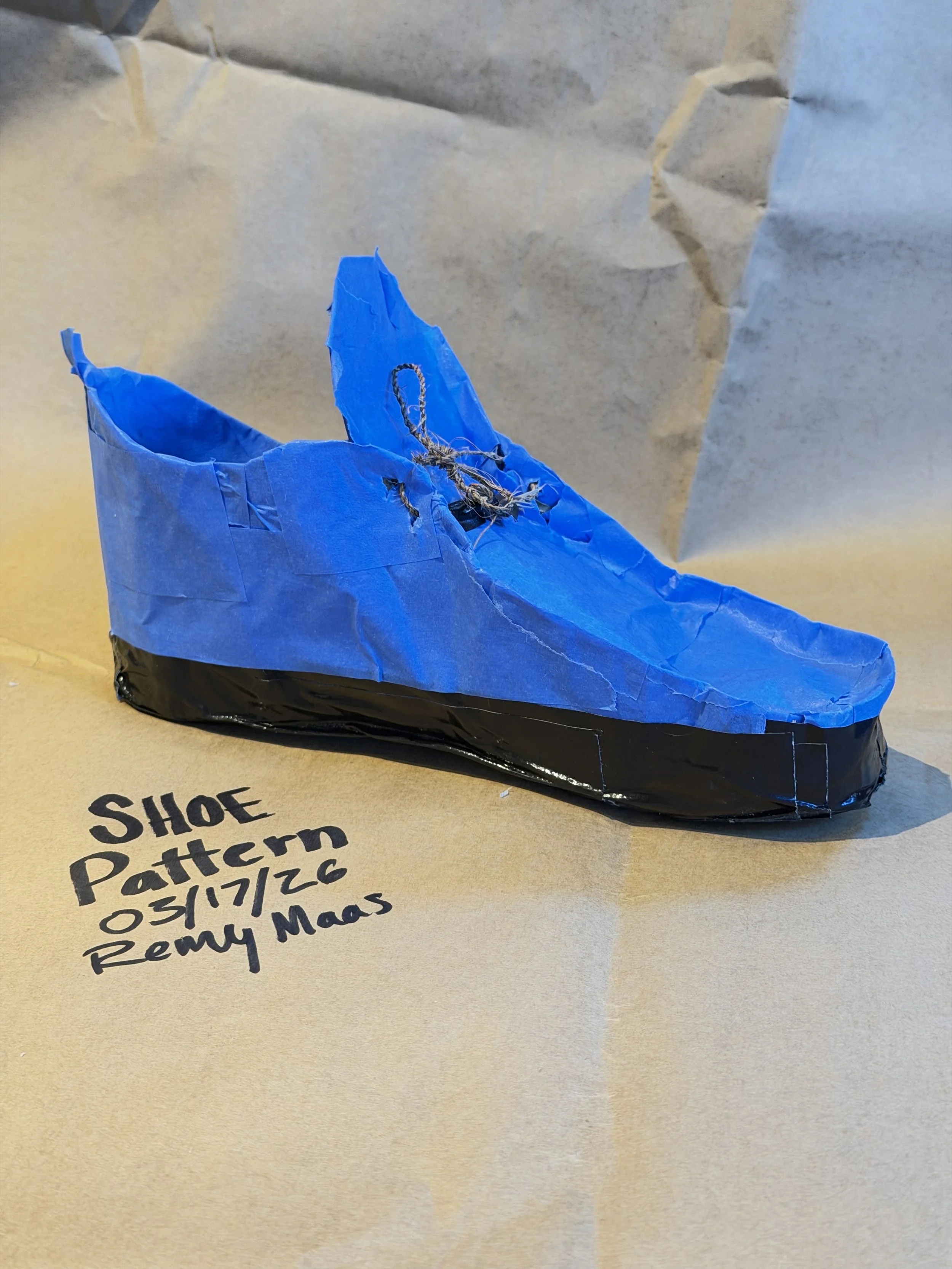
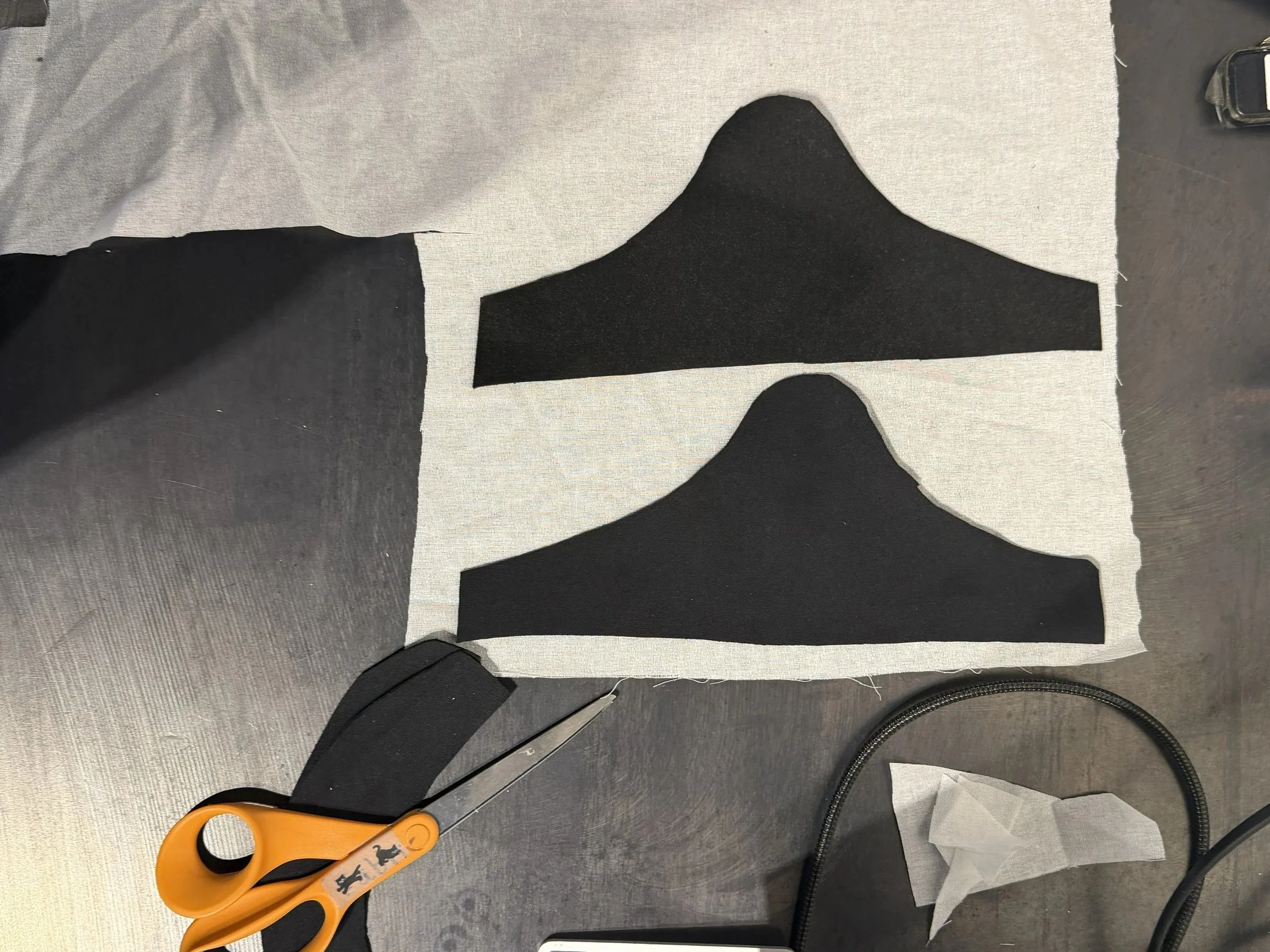
In a more refined design I use interlacing material to help hold the new insulation to the back of the material before sewing my pattern. Here I’m using Neoluxe by Shawmut Corporation which is a synthetic suede made from 70% or 100% recycled material.
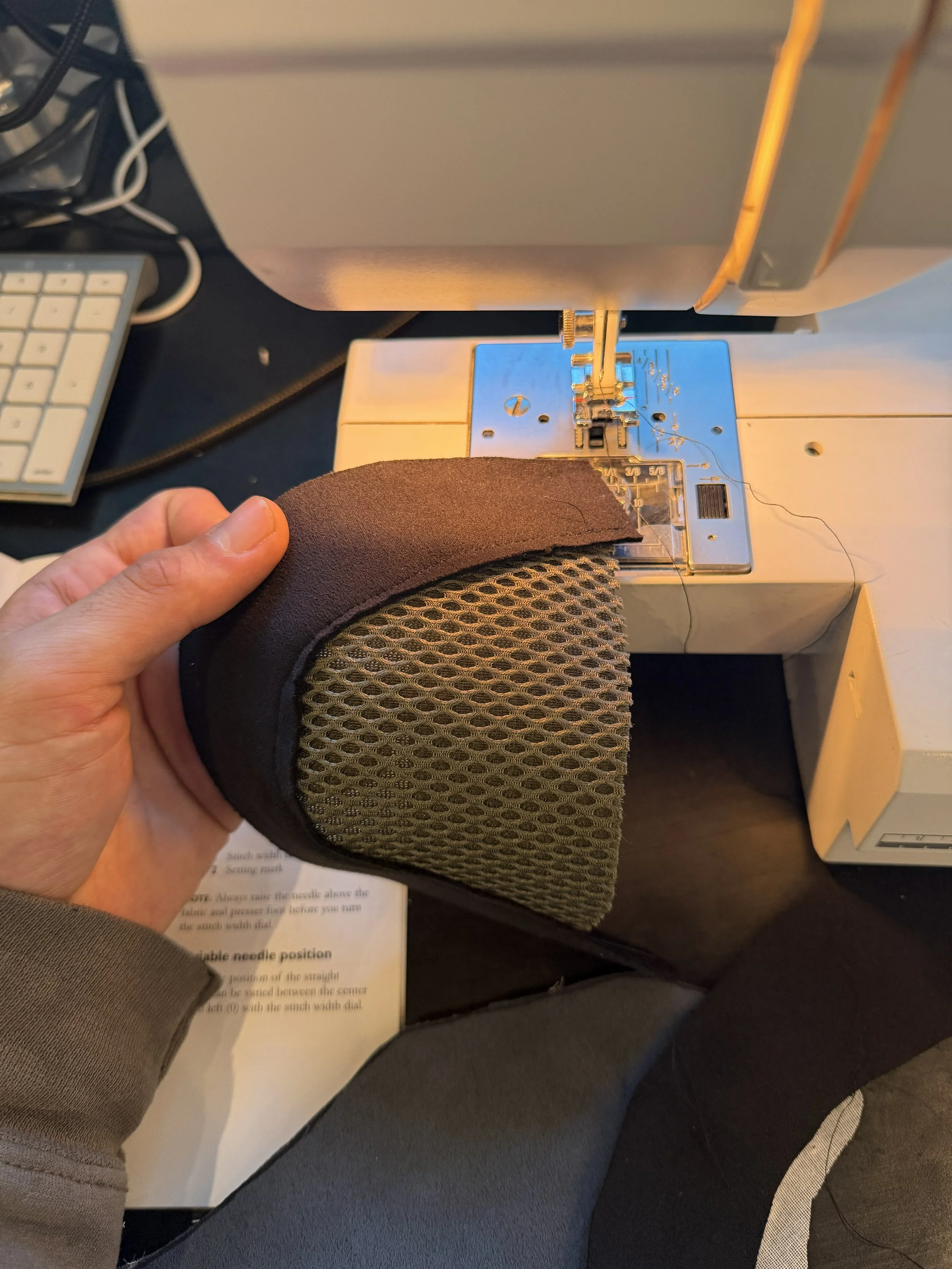
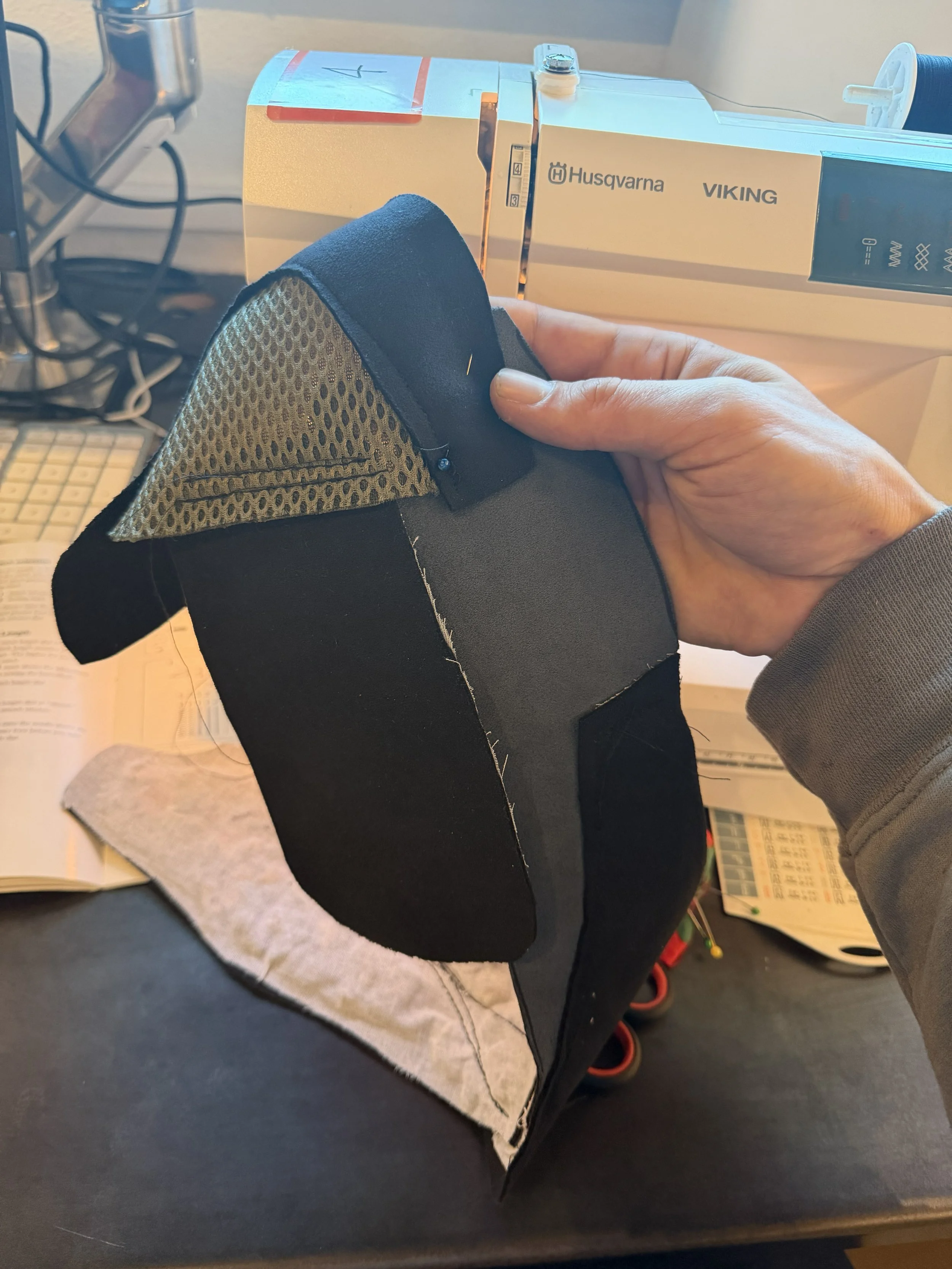
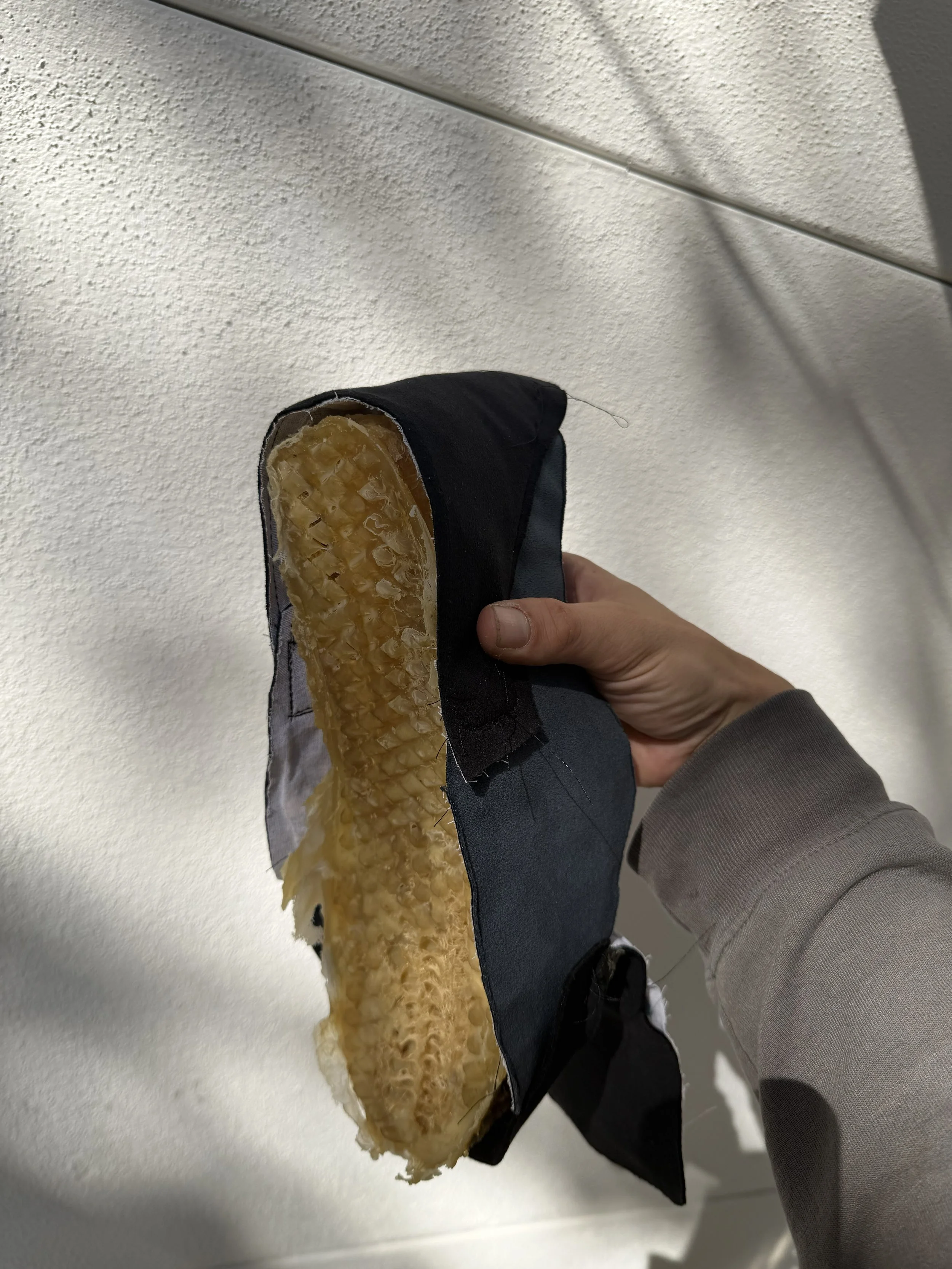
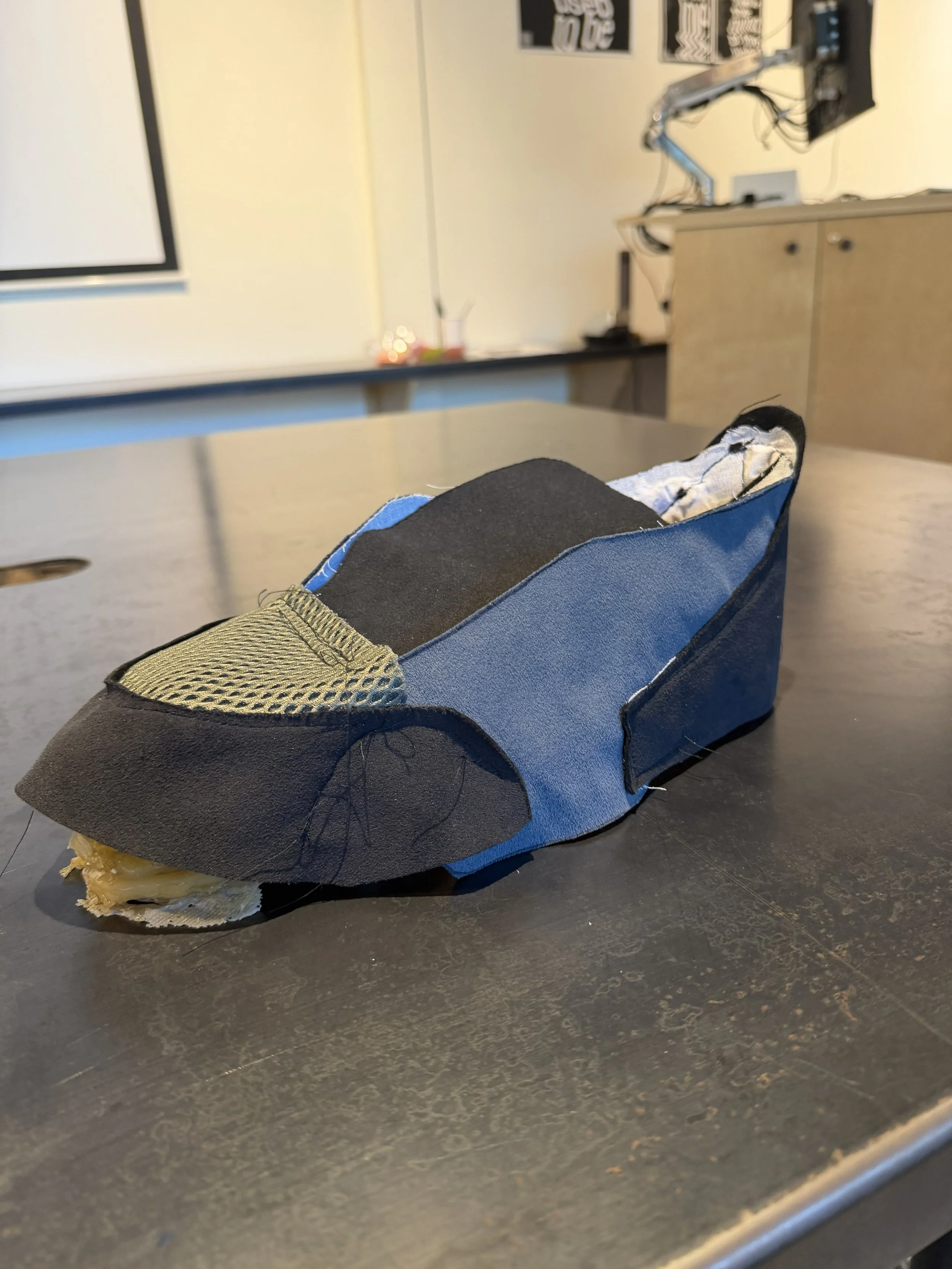
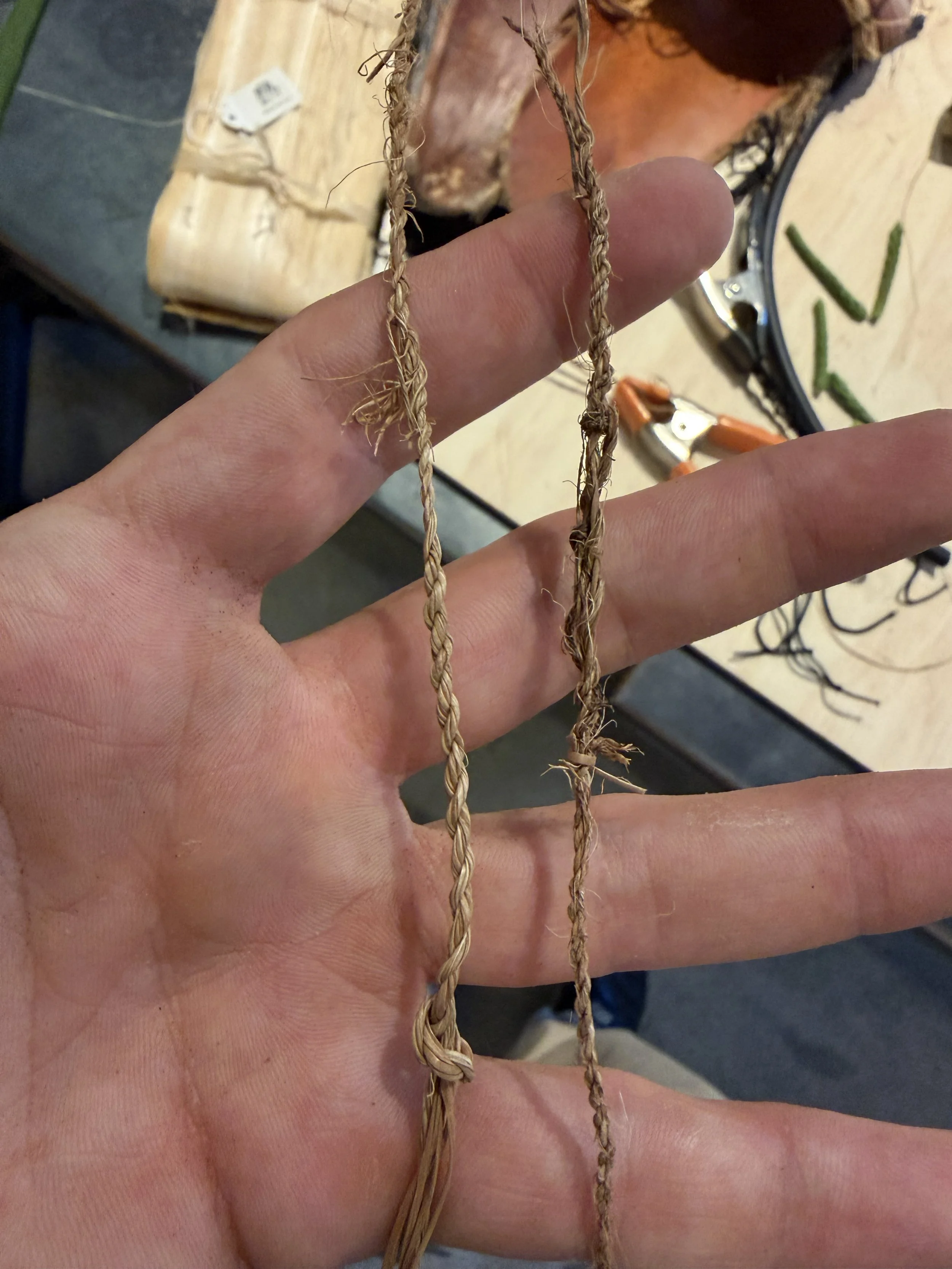
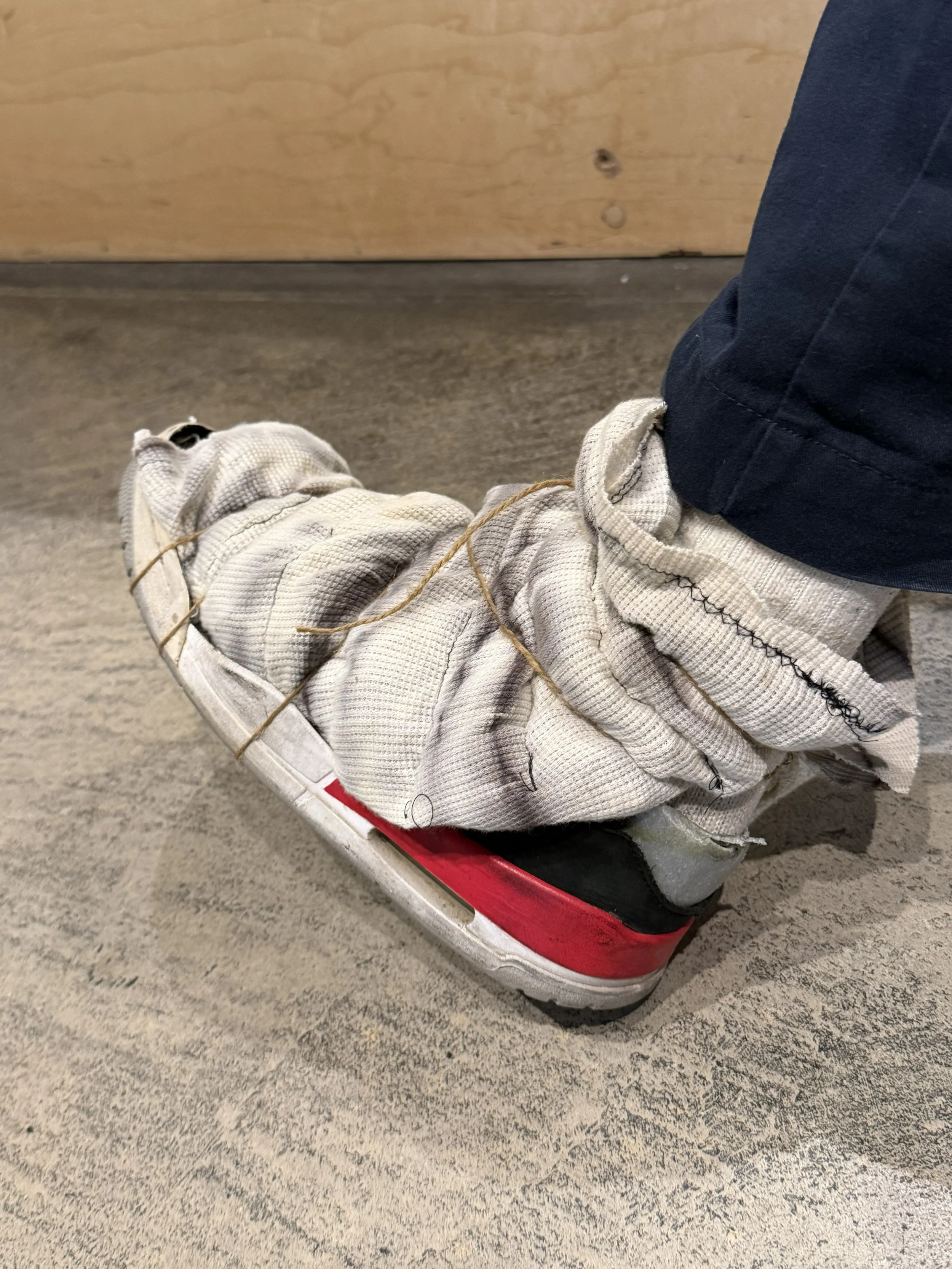
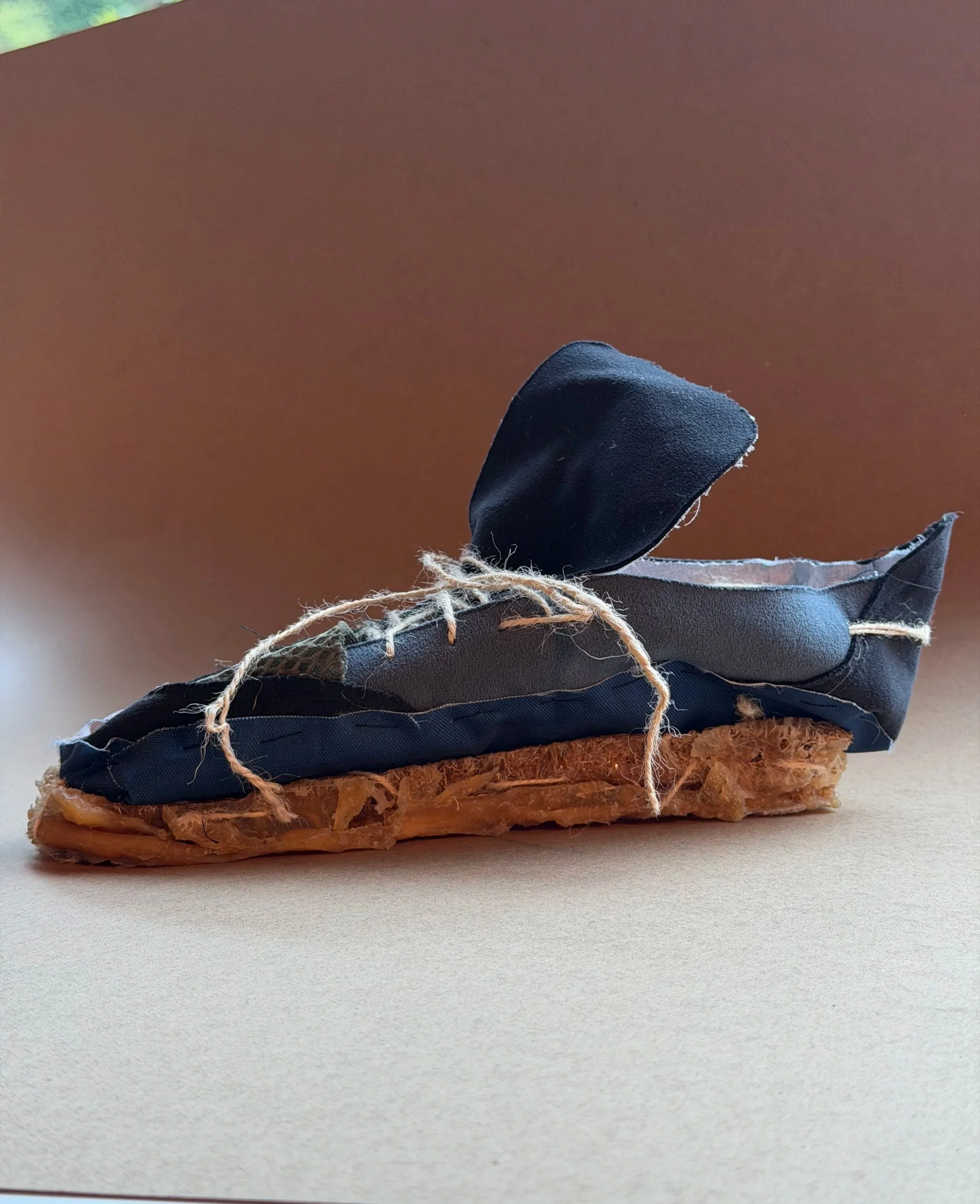
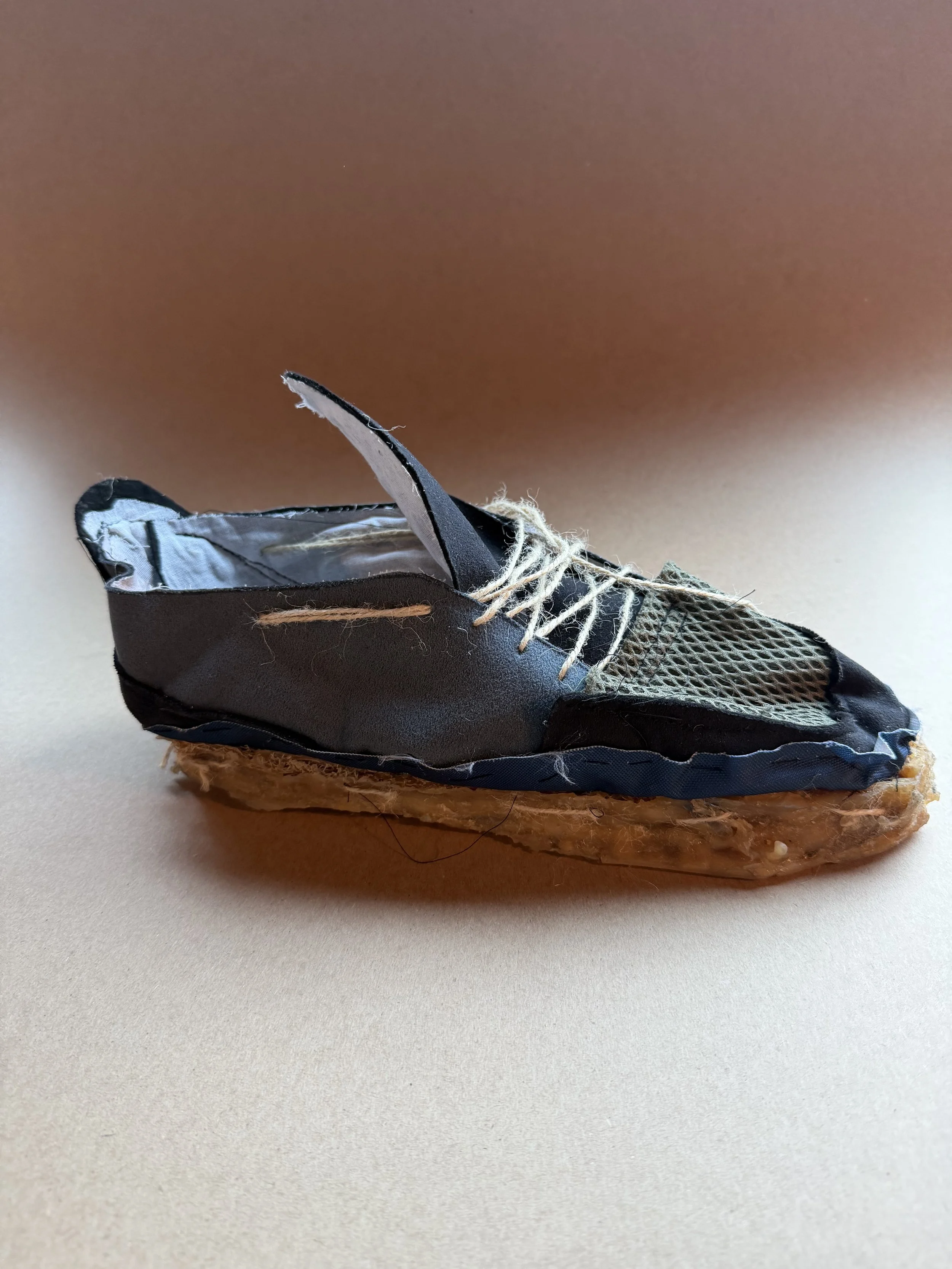
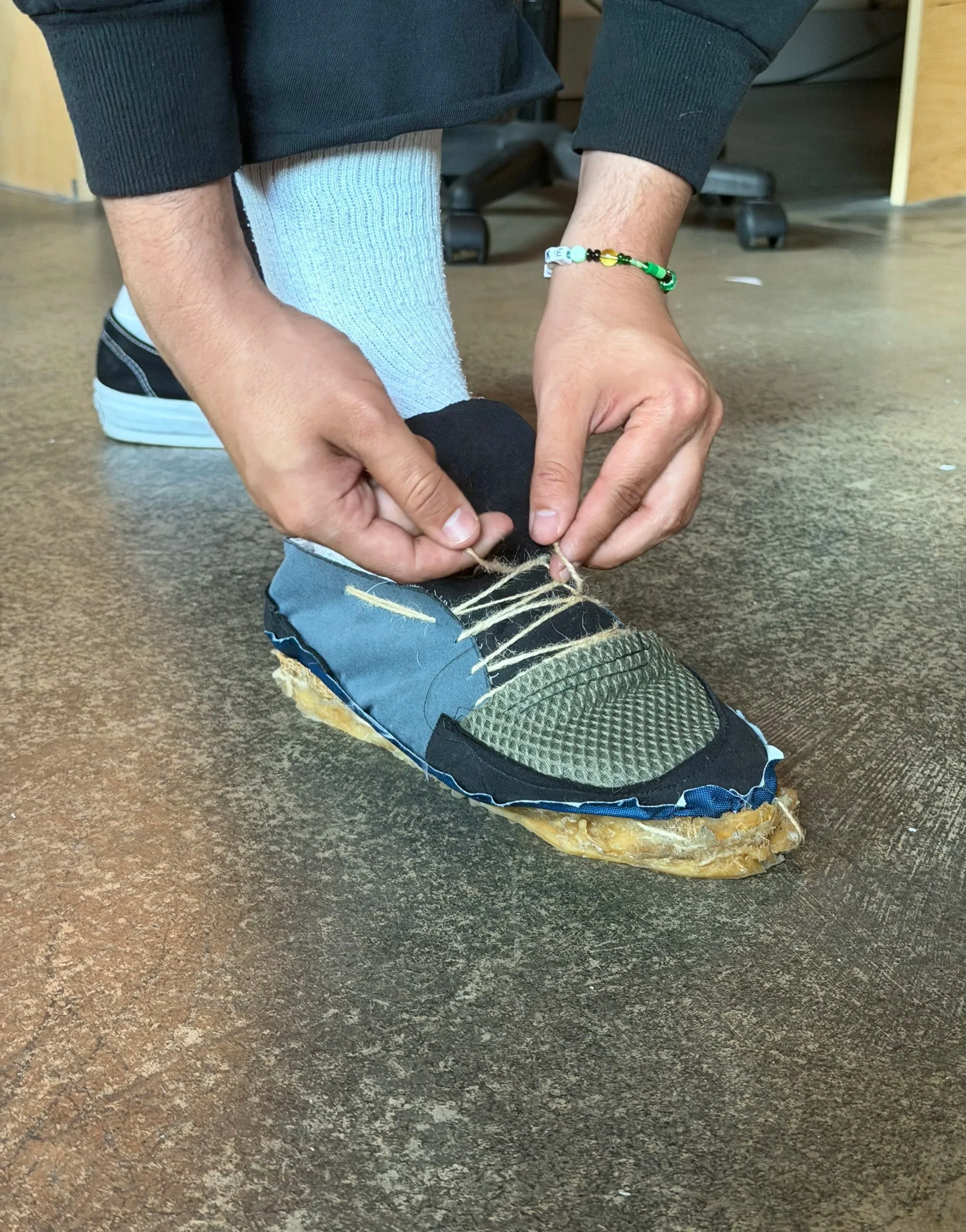
With slight hold back from a broken wrist at the skatepark, I used jute yarn to stitch the upper to the lower while using a piece of tote as a midsole.
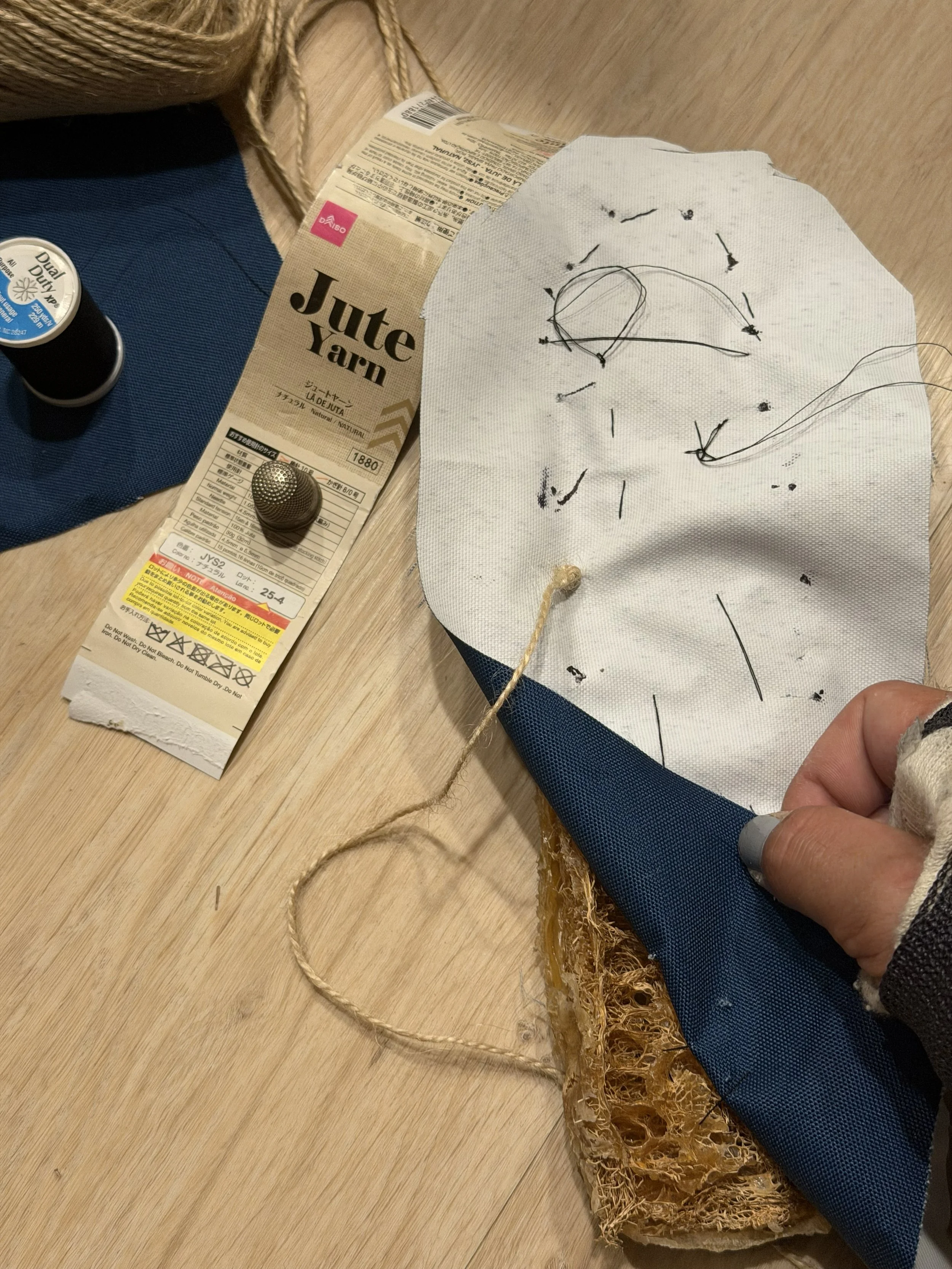
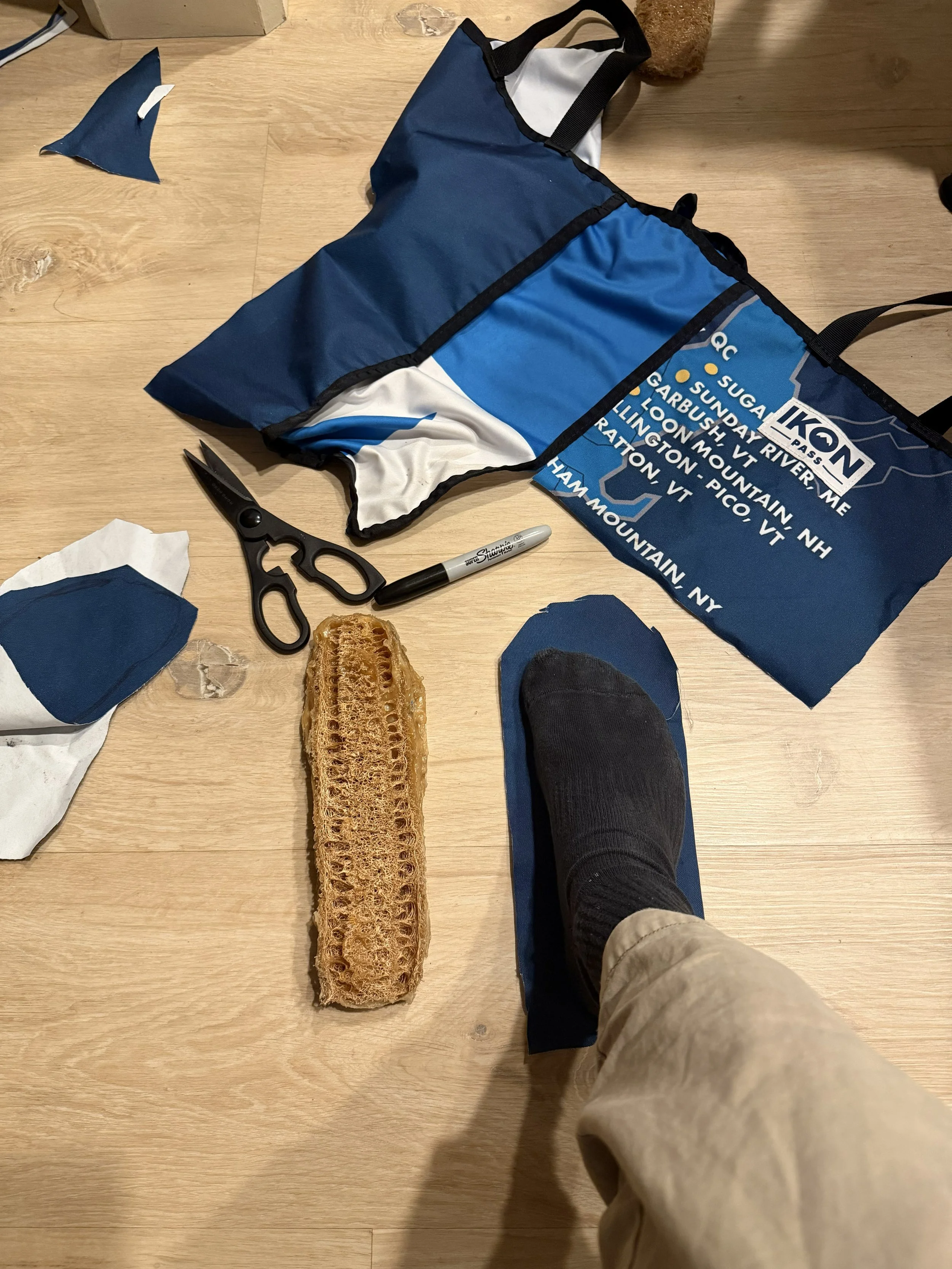
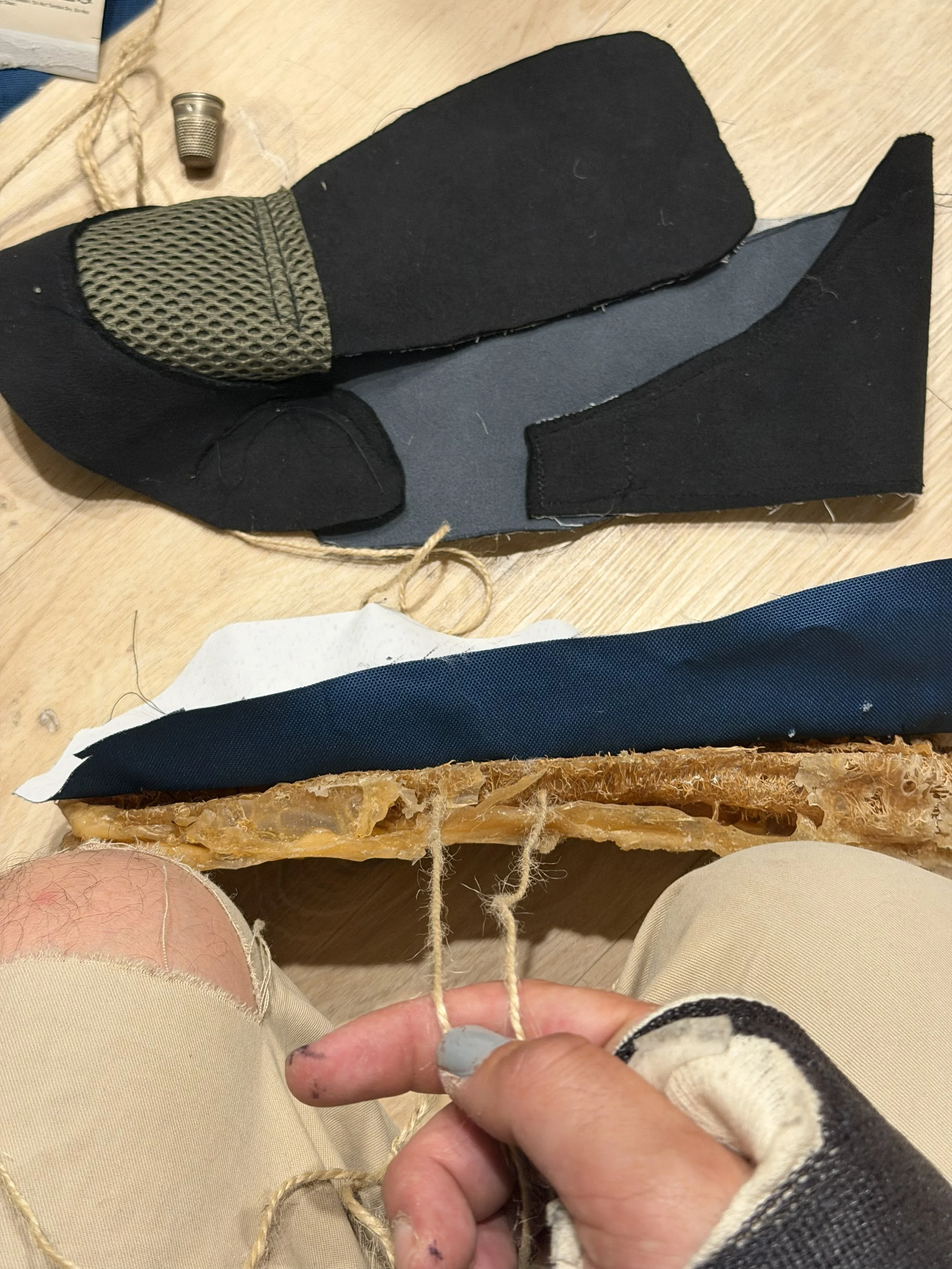
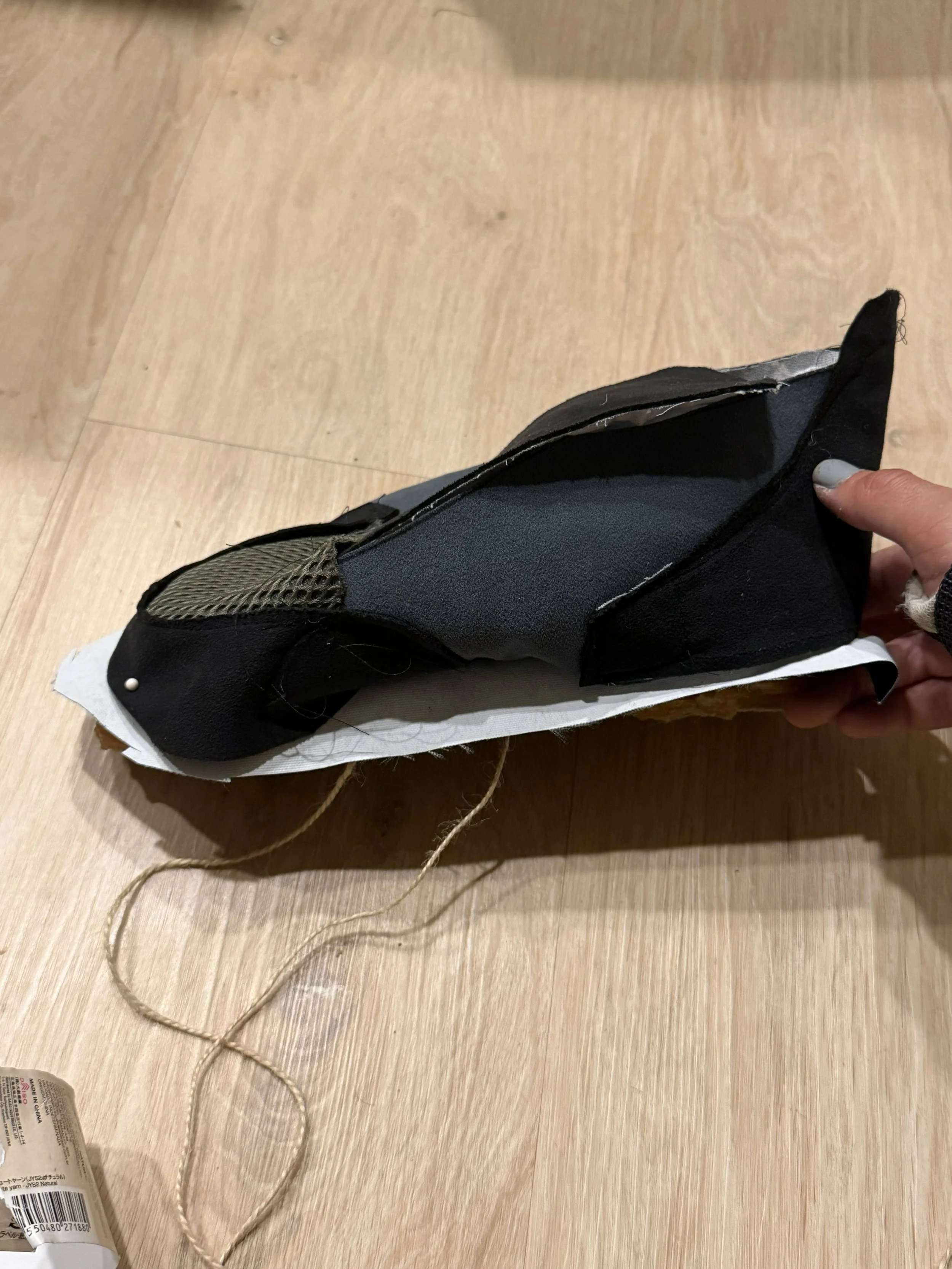
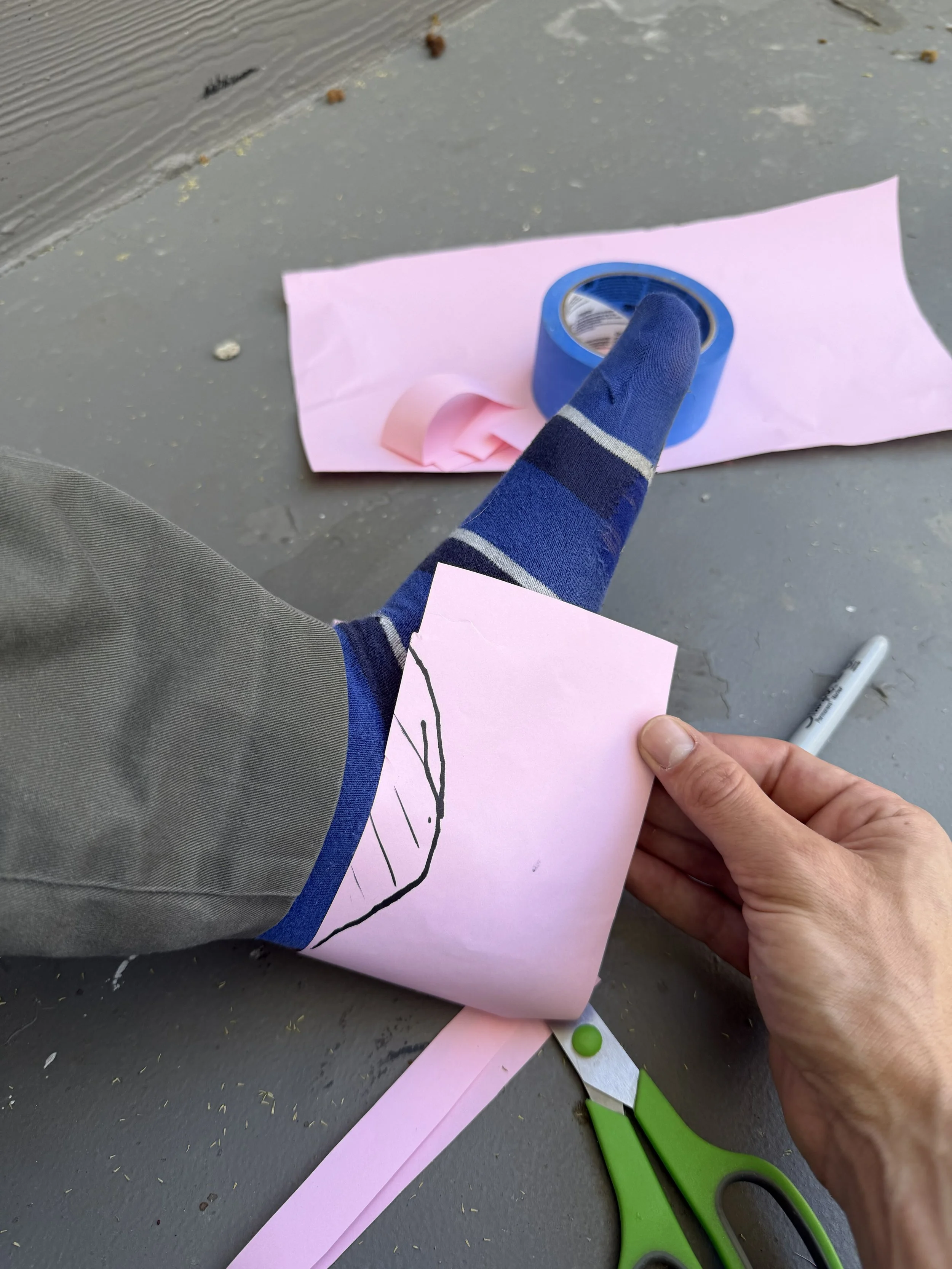
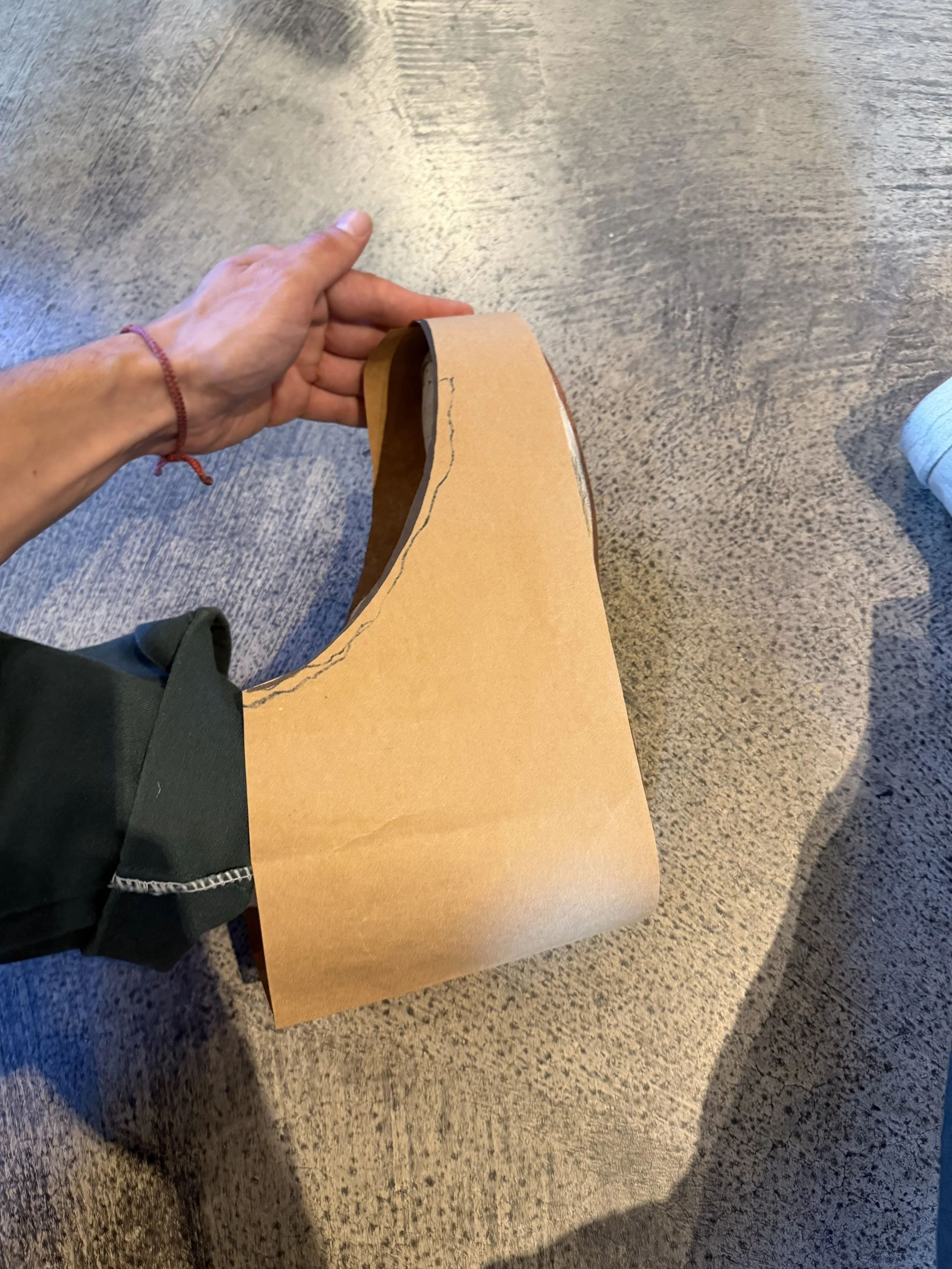
Though improvable with a proper shoe pattern and stitching; this case study proves all insulation used in sneakers can be made from recycled material that directly cleans the waste stream it creates. The shoe also showcases opportunity for reducing the total amount of rubber in a sole.
Further exploration.